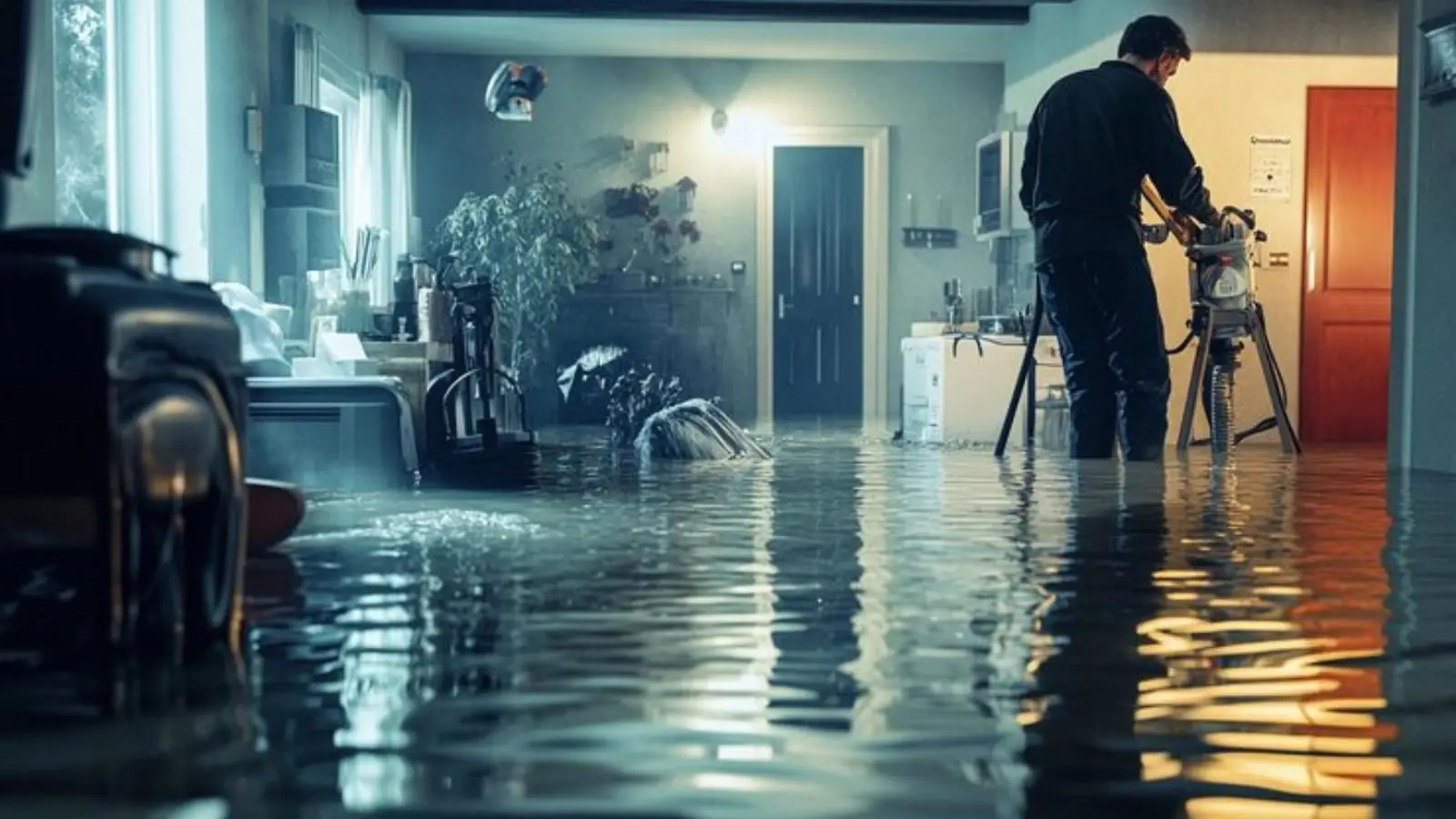
When water is spreading in your Framingham home
If water is moving through a floor, down a wall or across a basement right now, treat it as an emergency. Our dispatch line is open 24/7, including nights, weekends and holidays, and the call takes about two minutes. While you wait for a crew, there are four things you can safely do.
Shut off the water at the main valve if the source is a pipe or a fixture supply line. Lift rugs, books, electronics and small furniture off wet floors. Keep children and pets out of the wet area. Open cabinet doors under sinks so air reaches the wet cavity.
If water has reached an outlet, a power strip or the electrical panel, stay out of the wet area. Cut power only if you can reach the panel while standing on dry ground. Call the utility or 911 for any electrical or gas risk before you call us, because a restoration crew cannot start work until the hazard is handled.
Wet carpet, a damp wall or a spreading ceiling stain? That is a mitigation job
Homeowners rarely search for the word mitigation. They type things like "carpet is soaked after a leak", "wall feels damp and cold" or "ceiling stain getting bigger". Those are all symptoms of the same thing: water has gone somewhere it cannot dry on its own.
Water mitigation is the trade name for the first phase of water damage restoration. It means stopping the source, removing the water and drying the structure fast enough that the damage stops growing. The sooner it starts, the less has to be torn out and rebuilt later through water damage repair.
What happens during a water mitigation visit
Every visit follows the same order, whether the water came from a washing machine hose in Nobscot or a failed sump pump near Farm Pond. The order matters because each step makes the next one possible.
Stop the source
The crew locates the leak and shuts it off, or confirms you already did. A running supply line keeps adding water faster than any pump removes it.
Map the moisture
Technicians use moisture meters and a thermal imaging camera to find water inside walls, under flooring and above ceilings. A surface that looks dry can still be holding water in the cavity behind it.
Extract standing water
Submersible pumps and extraction units pull out pooled water. Wet carpet and pad are lifted or cut back when the pad cannot be dried in place.
Set the drying equipment
Air movers push dry air across wet surfaces and LGR dehumidifiers pull moisture out of the air. Wall cavities and floor assemblies get directed airflow so the framing dries, not just the finish.
Monitor until dry
The crew returns to read moisture levels and adjust equipment. The job ends when materials reach their dry standard, not when a day count runs out.
Structural drying: how walls, floors and framing actually get dry
Structural drying is the part of mitigation that takes the longest and is the easiest to get wrong. Water soaks into drywall, subfloor, framing and insulation, and each of them gives it back slowly. Pointing a single fan at a wet wall dries the paint and leaves the cavity wet.
A proper setup pairs air movers with LGR dehumidifiers so the air stays dry enough to pull moisture out of materials. Technicians record temperature, humidity and moisture readings each visit in a drying log. If a reading stops falling, the setup changes: more airflow in a cavity, a panel opened, or a section removed.
ANSI/IICRC S500 is the published standard for professional water damage restoration, and it is built around this measure-and-adjust approach. You can ask any company whether its crews work to S500 and what readings they will show you.
Water categories and what mitigation does about each
The source of the water decides how the crew handles it. S500 sorts water into three categories, and the category can get worse the longer water sits.
| Category | Typical source | What mitigation involves |
|---|---|---|
| Category 1 | Broken supply line, tub overflow, ruptured water heater | Extraction and drying. Most materials can be dried in place if the crew acts quickly. |
| Category 2 | Washing machine or dishwasher discharge, clean water that sat for days | Extraction, cleaning and antimicrobial treatment. Carpet pad and some porous materials are usually removed. |
| Category 3 | Sewage backup, river or brook flood water | Protective gear, removal of porous materials and sanitizing. Treated as a flood damage restoration job. |
Category is decided on site by the crew. Ask them to explain which one applies to your loss and why.
Where Framingham water damage usually starts
Framingham gets its drinking water through the city Department of Public Works distribution system, with supply purchased from the Massachusetts Water Resources Authority. That means a burst supply line or a failed water heater starts as clean Category 1 water. It does not stay that way, because water that sits in carpet, pad and drywall for more than a day or two picks up contaminants and starts feeding mold.
Flooding is the other main source. The city's hazard planning names the Sudbury River and Sucker Brook as sources of flooding, and a federal grant funded a study of flooding in the Walnut Street neighborhood. If you live in a low area near a brook or pond, check your address on the FEMA flood map and confirm what your insurance covers before the next heavy rain.
Winter adds frozen and burst pipes. Heating and occupancy matter to insurers, so a pipe that bursts in a house kept warm is treated differently from one in a vacant, unheated house. In an older house in Framingham Centre or Saxonville, a pipe in an exterior wall is a common place to look first.
Dry in place or tear out: the honest trade-offs
Mitigation is not the same as removing everything wet. Drying in place saves money and disruption when materials are clean and the crew moves quickly. Tearing out costs more up front and is the right call when the material cannot be made safe or dry.
Carpet over a clean-water leak can often be dried if the pad is lifted and the subfloor is reached the same day. Drywall that has wicked water more than a foot or two above the floor, insulation that is soaked, and any material touched by sewage or flood water are usually removed. If a crew tells you everything must go on day one, ask them to show you the readings that support it.
Mitigation does not waterproof a basement and it does not rebuild what was removed. It stops the damage and gets the structure ready for repair. If you are weighing a basement waterproofing project, that is a separate trade.
What changes the cost of water mitigation
A dispatcher can explain how scope and price are set before any work starts. We do not quote a number over the phone because the factors below decide it.
| Factor | Why it matters |
|---|---|
| Water category | Category 2 and 3 water adds protective steps and more material removal. |
| Area and depth affected | More square footage and wicking up the walls mean more equipment and more days. |
| Materials involved | Hardwood, plaster, plywood subfloor and insulation dry at different speeds. |
| Drying days and equipment | Each day on site, each air mover and each dehumidifier is part of the scope. |
| Rebuild scope afterward | Anything removed has to be replaced through repair, which is a separate phase. |
On insurance, the cause of the water usually decides the conversation. Your policy and your insurer have the final word, so read the wording on flood and gradual leaks, and photograph the damage before anything is moved.
Water on the floor right now?
Call the 24/7 line and a dispatcher will walk through the first steps while a crew is arranged.
Related work and where we go
Once the structure is dry, the next phase is water damage repair for drywall, flooring and paint. If the water was already several days old, mold remediation may be part of the plan. For standing water that needs pumps right away, see emergency water removal.
Crews work across Framingham and reach nearby towns such as Natick and Ashland from the same dispatch line.
Frequently asked questions
Yes. The dispatch line is answered 24 hours a day, every day of the year. Call, describe the water source and what it has reached, and a crew is arranged as soon as one is available. Same-day response is the goal when crews are available, and the dispatcher will tell you honestly if it is going to be longer.
Most clean-water losses take three to five days of equipment time, but it depends on the materials and how much water they absorbed. Hardwood, plaster and thick insulation take longer than carpet. Drying is finished when moisture readings reach the dry standard, not on a fixed day.
For a small clean-water spill caught within hours, household fans and a dehumidifier can help. For anything that has soaked into walls or subfloor, consumer equipment rarely moves enough air or removes enough moisture, and surfaces can feel dry while framing stays wet.
Not always. Carpet and pad that got wet from a clean source can often be dried in place when the crew starts quickly. Pad is the most likely thing to be removed, and carpet that has sat in Category 2 or 3 water is usually removed.
Mold needs moisture and time. Materials that stay wet for more than a day or two are at risk, which is why drying starts before cleanup or rebuild. If you already see or smell growth, mention it on the call so the crew can plan containment.
It often is when the cause is sudden and accidental, such as a burst pipe or a failed appliance line. Flood damage is usually excluded from standard homeowners policies. Ask your insurer before work starts and keep photos of the damage.
Water still spreading? Call (508) 446-9244 and a dispatcher answers around the clock.