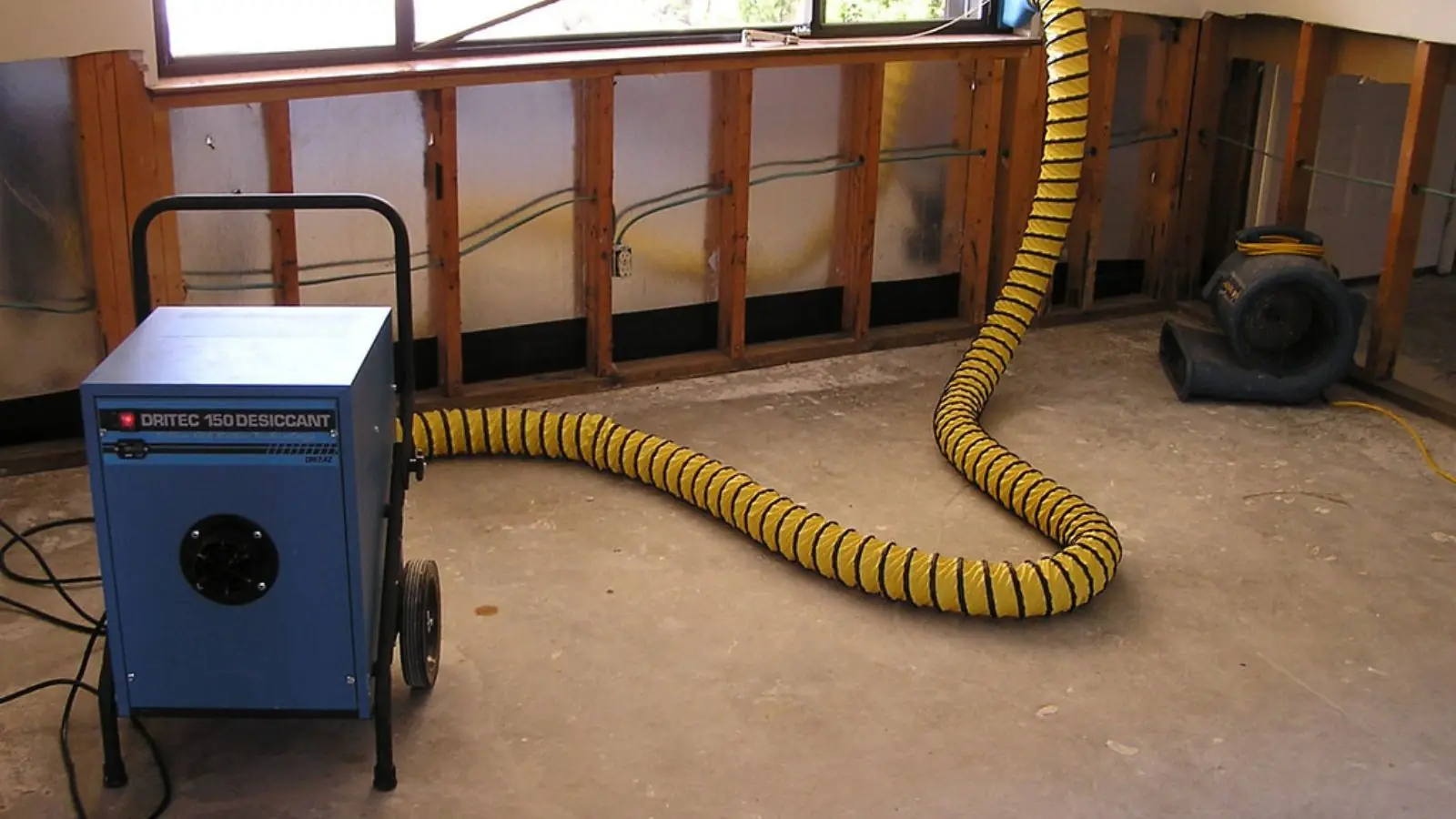
Water damage repair starts where drying ends
Water damage repair is the rebuild phase. After water has been stopped, removed and dried, the materials that were cut out or ruined have to be replaced so the room is a room again. That means drywall, insulation, trim, flooring, cabinets, paint and sometimes framing.
This page is about repair after the damage is under control. If water is still spreading, call the 24/7 dispatch line first and start with water mitigation. Repair done over wet material fails, and the second repair costs more than the first.
Most repair calls begin with a stain, a bulge or a floor that has started to cup. A crew inspects, explains what is wrong, explains the scope and how the price is set, and only then starts work.
How a water damage repair job runs
The order matters. Skipping a step is how paint peels and floors lift six months later.
Confirm the structure is dry
Moisture readings on framing, subfloor and wall bottoms must match a dry reference before anything is closed up. If the readings are high, the repair waits.
Fix or confirm the source
A leaking roof, a failing pipe or a bad window flashing has to be repaired by the right trade. Repairing the room first only hides the next leak.
Check permit needs
Cosmetic repair usually does not need a permit, but structural work, electrical and plumbing often do. Permit rules vary, so ask the Framingham Inspectional Services Division at 508-532-5500 or check the online portal.
Rebuild
Replace insulation, hang and finish drywall, and install trim and flooring. Large patches need taping, mudding and sanding in several coats with drying time between.
Paint and finish
Prime stained areas with a stain-blocking primer, then paint a full wall to avoid a visible patch.
Ceiling and wall water damage repair
Ceilings tell the story first. A brown ring, a sag or a bulge usually means water is sitting above. Do not puncture a bulging ceiling unless you are ready for a rush of water, and do not paint over a stain until the source is found and the area is dry.
Small, dry stains often need only stain-blocking primer and paint. Sagging or soft drywall is cut out back to a dry, solid edge, the insulation above is checked and replaced if wet, and new board is hung and finished. Ceilings under a bathroom or a roof leak need extra care because the leak may have returned several times.
Walls wick water upward from a wet floor, often a foot or more above the waterline. Crews cut a clean line above the wicking, replace insulation behind it and tape and finish the patch so it blends.
Repair options by material
Many repairs have more than one right answer. The honest trade-offs are below.
| Material | Repair option | Replace instead when |
|---|---|---|
| Drywall | Patch and refinish small dry stains | Board is soft, sagging, moldy or wet through |
| Ceiling | Stain-block and repaint after the leak is fixed | Sagging, paper face is peeling or insulation above is wet |
| Hardwood floor | Wait for drying, then sand and refinish if cupping eases | Boards are buckled, cracked or still wet after drying |
| Laminate and vinyl plank | Dry and re-lay sections if joints are intact | Edges swell or lift |
| Insulation | Dry only if the material is dry quickly | Soaked, matted or smelling |
| Cabinets | Dry and reattach if toe kicks are only damp | Particleboard has swollen |
These are field rules of thumb. The crew will show the moisture readings that support each decision.
Water-damaged hardwood floors: what to expect
Hardwood is the repair people worry about most. Boards absorb water, swell and cup, meaning the edges rise higher than the middle. Do not sand while the wood is still wet, because boards that look level while swollen can shrink into gaps once they dry.
Cupping often eases if the floor is dried slowly and evenly, and many floors can then be sanded and refinished. Boards that have crowned, cracked or buckled off the subfloor are replaced. The timeline is weeks, not days, because rushing the drying can split boards.
Roof leaks and where repair stops
Callers often describe a ceiling stain after rain, a collapsed section or a leak around a chimney or window. Roof and exterior repairs belong to a roofer, siding or window contractor. We repair the interior damage after the source has been fixed.
In Massachusetts, ice dams add another cause. The Division of Insurance notes that ice dam damage may be covered if it is sudden and not caused by lack of maintenance. Ask your insurer before work begins and keep photos of the stains and the roofline.
What changes the cost of water damage repair
Repair is the most variable part of a water damage job. A dispatcher explains how scope and price are set before work starts.
| Factor | Effect on the job |
|---|---|
| Rebuild scope | A patched ceiling and a gutted basement are not the same job. |
| Materials | Hardwood, tile and custom cabinets cost more than carpet and standard drywall. |
| Water category | Contaminated water means more removal and more replacement. |
| Drying days before repair | A floor that is not dry cannot be closed up. |
| Finish level | Matching existing paint, trim and flooring takes time. |
Insurance, in general terms: sudden and accidental damage is often covered, gradual leaks and neglect often are not, and flood is usually excluded. Keep your estimate and your photos together.
Not sure what the damage needs?
Call the 24/7 line. A dispatcher can explain how an inspection works and when someone can look at it.
Where repair fits in the full job
Repair follows drying and cleanup. If you are still dealing with wet materials, see water damage cleanup and flood damage restoration. If you see signs of mold in a wall you opened, mold remediation comes before the new drywall goes up. We repair homes in Framingham and nearby towns such as Wayland.
Frequently asked questions
Replacing drywall, insulation, trim, flooring, cabinets and paint after the structure is dry. It also covers ceiling repair after leaks. It does not include fixing the source, such as a roof or a pipe, which belongs to the right trade.
Repair work is scheduled in daytime hours. The dispatch line is 24/7 for emergencies, and a dispatcher can arrange an inspection and explain scope and price on the first call.
Only after the source is fixed and the area is completely dry. Use a stain-blocking primer, otherwise the stain comes back through the paint.
Often, if they are dried slowly and the boards are not crowned, cracked or buckled. Wait until moisture readings are normal before sanding or refinishing.
Permit rules vary by the type of work. Structural, electrical and plumbing work often need permits, and cosmetic repair often does not. Ask the Inspectional Services Division at 508-532-5500 or use the online portal.
A small patch can take a few days. A large rebuild takes weeks because drywall coats and paint must dry between steps.
Water still spreading? Call (508) 446-9244 and a dispatcher answers around the clock.