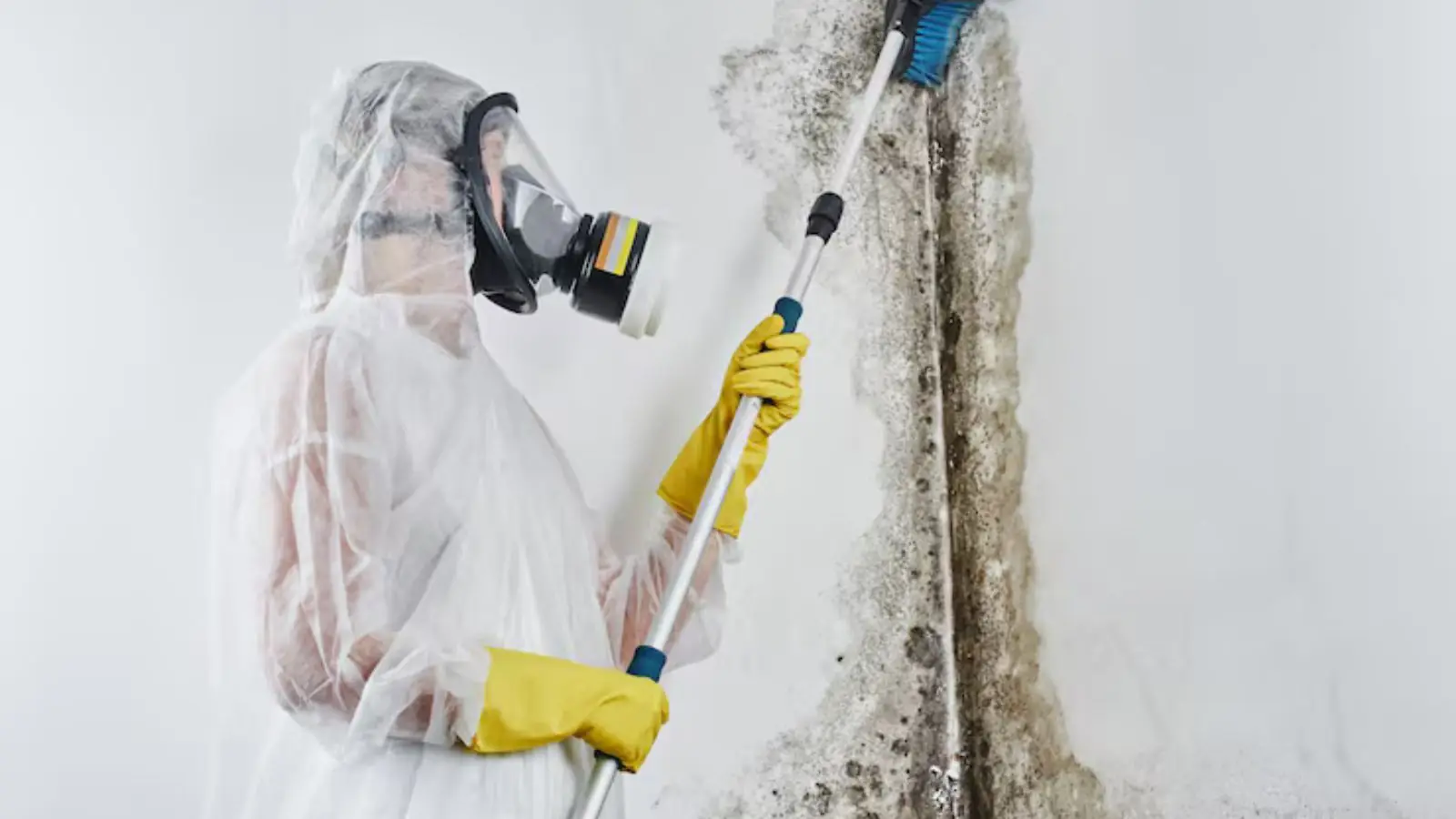
A musty smell or dark spots after a leak? Start here
Most people find mold after a leak, not before. A musty smell in a finished basement, a dark patch on a ceiling below a bathroom or fuzzy spots in a closet that shares a wall with a leaking pipe are typical signs. The visible growth is a symptom. The wet material behind it is the problem.
Mold remediation is the trade term for finding that moisture, containing the affected area, removing contaminated material and cleaning what can be kept. It is a secondary service to water damage restoration because it often follows a leak, a flood or a slow drip that no one caught in time.
Mold needs moisture, so the leak comes first
Mold needs moisture, organic material to grow on and time. Remove any one of them and growth stops. Cleaning mold without fixing the water source is the most common reason it returns, and no honest contractor can promise it never will.
Common sources include a toilet or sink supply leak, an air conditioner condensate line, a roof or siding leak and flooded basements. Mention the source on the first call. If a leak is still active, a plumber or roofer fixes it and our crews handle the water and drying through water mitigation.
How a mold remediation job is run
The process follows ANSI/IICRC S520, the published standard for professional mold remediation. You can ask any company whether its crews work to it.
Inspect and find the moisture
The crew checks readings with a moisture meter and thermal imaging camera to find wet material, not just visible growth.
Contain the area
Plastic barriers and negative air keep spores from moving into the rest of the house. Air scrubbers with HEPA filtration run during the work.
Remove contaminated material
Porous materials such as soaked drywall and insulation are cut out and bagged. Wood framing is cleaned or sanded where it can be saved.
Clean and dry
Surfaces are HEPA vacuumed and wiped, and the area is dried until readings are normal.
Verify
The crew checks the finished work. Some situations call for independent post-remediation testing, covered below.
Mold removal and black mold cleanup
Callers often ask about black mold in particular. The color does not tell you what kind it is or how serious the situation is, and only lab testing can name a species. Remediation follows the same containment and removal steps whatever the color.
Small patches on hard, non-porous surfaces such as tile or glass can often be cleaned by a homeowner with household cleaner and gloves. Growth on drywall, ceilings, carpet or insulation, or any patch larger than a few square feet, usually needs professional removal because the material has to be cut out.
Questions about health effects belong with a physician. We do not diagnose or give medical advice.
Mold after water damage
Water damage and mold are linked by time. Materials that stay wet more than a day or two are at risk, which is why water mitigation starts with drying before cleanup. If a flood or leak was not dried, the crew may find growth when walls are opened.
In that case the plan changes. Containment goes up first, wet materials come out in a controlled way and the area is dried and checked before any rebuild through water damage repair.
Testing, inspection and clearance for a home sale or loan
Callers often ask about inspection and testing. An inspection finds moisture and visible growth. Testing, such as air or surface sampling, is done by a lab and is a separate step from removal.
Independent clearance testing is done by a third party after remediation. Buyers, lenders or insurers sometimes ask for it before a home sale or loan closes. We explain what the inspection involves when you call. We make no promises about what a lender, buyer or insurer will accept, because that is their decision.
Cleaning it yourself or calling a professional
Size, material and cause decide the answer.
| Situation | Reasonable DIY | Call a professional |
|---|---|---|
| Small patch on tile or glass | Clean with household cleaner, gloves and ventilation | If it returns quickly |
| Growth on drywall or ceiling | No, material has to be removed | Yes |
| After a flood or sewage backup | No | Yes |
| In HVAC ducts or a large area | No | Yes |
| Musty smell with no visible source | Look for leaks | Yes, inspection finds hidden moisture |
These are general guides. Ask the inspector to show you the moisture readings and what they found behind the surface.
What changes the cost of mold remediation
No two jobs are alike. A dispatcher explains how scope and price are set before work starts.
| Factor | Effect on the job |
|---|---|
| Area affected | More square footage means more containment and removal. |
| Materials involved | Porous material costs more to remove than non-porous to clean. |
| Access | Crawl spaces, attics and finished basements take more labor. |
| Moisture source | An active leak must be stopped before cleaning begins. |
| Testing and rebuild | Clearance testing and replacement are separate scopes. |
Insurance, in general terms: coverage often depends on what caused the moisture. Sudden and accidental causes are often covered, while gradual leaks and neglect often are not. Ask your insurer or check your policy.
Rules and Framingham resources
State rules on who may perform mold work vary, so ask any contractor whether your state licenses mold work and what that means for your job. The Framingham Inspectional Services Division handles code and nuisance enforcement, and tenants who are unsure who to call about a rental can start there at 508-532-5500.
If the moisture came from flooding, the city floodplain and the FEMA flood map can help you understand the risk. Check your address on the FEMA Flood Map Service Center.
Think you have mold?
Call the 24/7 line. A dispatcher can explain how an inspection works and when someone can come look.
Related water damage services
If the leak is recent, water damage cleanup removes wet material before mold takes hold. Growth after flooding is covered under flood damage restoration. Our crews also serve Sudbury and the other nearby towns from the same line.
Frequently asked questions
Call and describe what you see. A dispatcher explains how the inspection works and arranges the earliest visit when crews are available. Same-day response is the aim when the schedule allows, and we do not promise a fixed arrival time.
The dispatch line is open 24/7. Most mold calls are not emergencies, but an active leak, sewage or flooding is, and the dispatcher will handle that first.
Household cleaner works on hard surfaces. On porous materials such as drywall, mold grows into the material and has to be removed. Mixing bleach with other cleaners can create dangerous fumes.
It will not if the moisture is gone, and it can if the moisture returns. No one can promise it will never come back, so fix the source and keep the area dry.
Often only when the water source was a covered event. Gradual leaks and neglect are often excluded. Ask your insurer before work starts.
Clearance testing is done by an independent third party, not by the company that did the removal. We explain when it is useful, for example before a home sale or loan.
Water still spreading? Call (508) 446-9244 and a dispatcher answers around the clock.