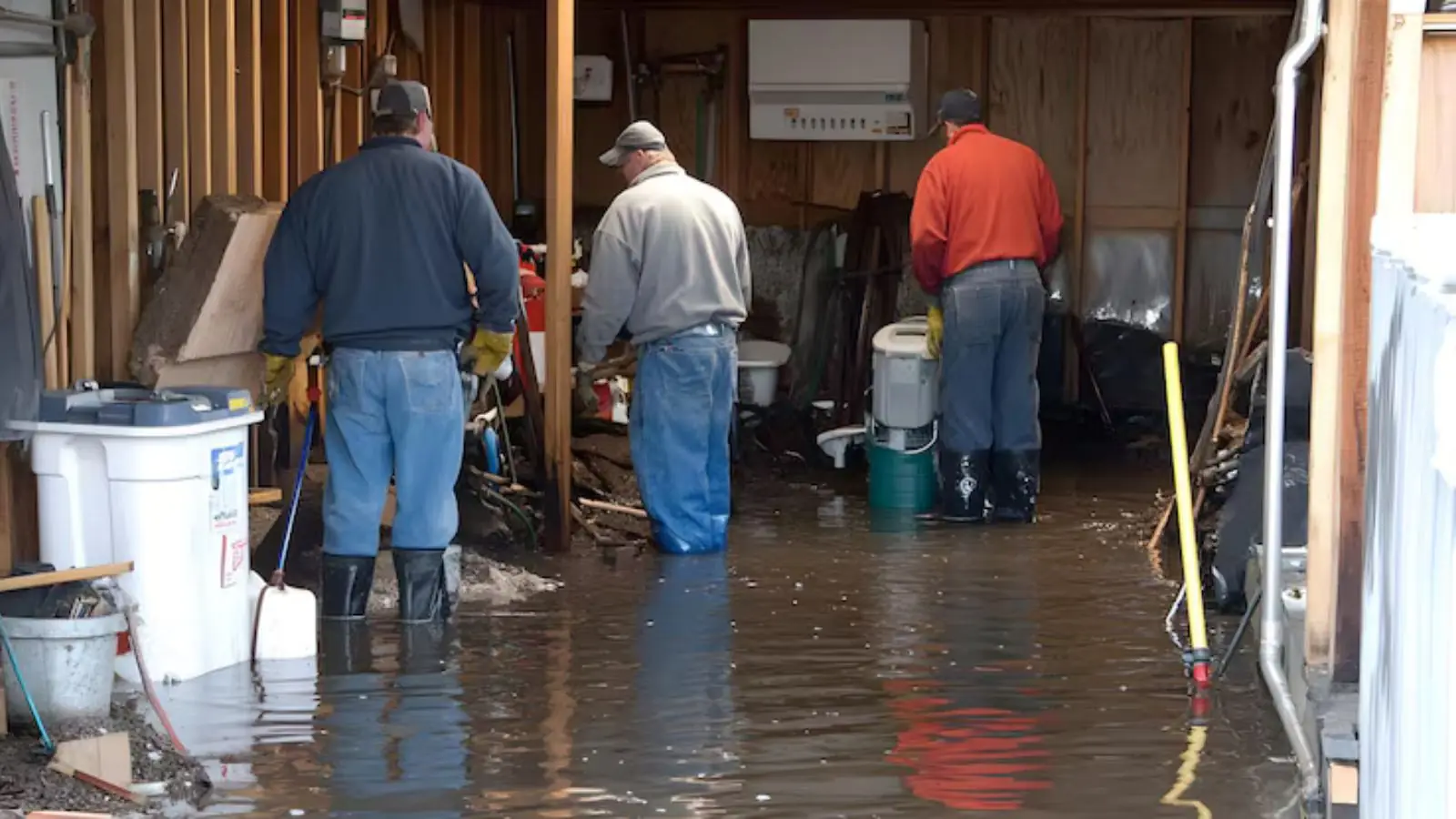
When standing water is an emergency
Water you can see on the floor is the easy part to remove and the part that does the most harm if it waits. Our dispatch line answers 24/7, and a crew with pumps and extraction units is sent as soon as one is available, with same-day response as the aim. While you wait, there are a few steps worth taking.
Stop the source if you can reach it. That usually means the main shut-off valve near where the water line enters the house. Move anything valuable above the waterline, and keep everyone out of the water if any appliance, cord or outlet is touching it.
If the water is rising from a floor drain, a toilet or a sump pit during a storm, do not wade in. Water that has come from outside or from a sewer line can carry contamination, and our flood damage restoration crews treat it differently from a clean supply-line leak.
Safety first: electricity and water
If water has reached the electrical panel, outlets or anything plugged in, stay out of the wet area. Shut off power at the panel only if you can reach it standing on dry ground. Call the utility or 911 for any electrical or gas concern before you call a restoration crew, because pumps cannot go in until the room is safe.
How standing water is actually pulled out
The tool depends on the depth. A few inches across a finished basement call for submersible pumps that sit in the water and push it out through hoses. Shallower water on hard floors and carpet is removed with extraction units, which are wet vacuums built to lift water out of fibers and pad.
Truck-mounted extractors move the most water in the least time, and portable units reach rooms a truck hose cannot. Crews often use both on the same job, starting with the pump and finishing with extraction so the carpet and pad are not left holding gallons.
Removing the water is step one of three. Moisture stays in the subfloor, wall bottoms and framing after the visible water is gone, so the next stop is drying under water mitigation. Skipping that phase is how a floor that looks fine turns into a musty one two weeks later.
Burst pipe water damage: find it, stop it, then remove the water
A burst pipe is the classic after-hours call. Water pours from a pipe inside a wall, a ceiling cavity or a basement joist bay, and it can put hundreds of gallons into a house before anyone notices. The first job is the shut-off valve, then the water that has already spread.
In Massachusetts winters the cause is often a frozen section of pipe on an exterior wall or an unheated space. The Massachusetts Division of Insurance notes that most homeowners policies cover sudden and accidental pipe bursts when the home was properly heated and occupied, so keep the heat on and photograph the damage before anything is moved.
Crews trace the break by following the wet path with a moisture meter and a thermal imaging camera, since the visible stain is often several feet from the real leak. A plumber repairs the pipe. The restoration crew handles everything the water touched.
Common standing-water situations and the first move
Different sources need different first steps. Use this as a quick guide while you are waiting for a crew.
| Situation | What to do first | Water type to expect |
|---|---|---|
| Burst or frozen pipe | Shut the main valve, open cabinet doors, lift valuables | Clean at first, worse after a day or two |
| Sump pump failure | Shut off power to the pump, keep clear of the pit, move stored items | Groundwater, treated with caution |
| Washing machine or dishwasher overflow | Unplug if dry to reach, close the supply valve, lift rugs | Clean to lightly used, depending on the cycle |
| Water heater leak | Shut off the cold supply to the tank and the power or gas feed if safe | Clean |
| Roof or ceiling leak | Move furniture, set a bucket, do not poke a bulging ceiling | Clean to dirty after crossing insulation |
| Sewer or drain backup | Stay out, keep people and pets away, call the city for the main line | Contaminated, never treated as clean |
Your crew will confirm the water category on site. Ask them to explain it before work starts.
Crawl spaces, basements and whole-house water
Crawl spaces and basements hold water longest because there is nowhere for it to drain. A few inches in a Framingham basement can soak the bottom of every wall and the stored items against them, and crawl space water can sit unseen under a floor for days.
Large losses, such as a whole floor under water, get a bigger equipment list and more than one crew visit. If a storm flooded the neighborhood and the water came from outside, the job also moves into flood territory, where insurance rules change and a separate flood policy matters.
What changes the cost of water removal
Scope and price are explained before work begins. These are the factors that decide the number, and none of them can be judged from a phone call alone.
| Factor | How it affects the job |
|---|---|
| Water category | Contaminated water needs protective steps and disposal of porous materials. |
| Depth and area | More gallons and more square feet mean more pumps, more hose and more time. |
| Materials involved | Carpet, pad, hardwood and laminate respond differently to extraction. |
| Drying days after removal | Extraction is quick, and drying equipment is billed by days on site. |
| Rebuild afterward | Anything removed has to be replaced, which is a separate repair scope. |
On insurance in general terms: sudden and accidental damage is often covered, gradual leaks and neglect often are not, and flood damage is usually excluded. Ask your insurer before work begins and take photos first.
Standing water right now?
Call the 24/7 line. Describe where the water is and what it has touched, and the dispatcher will go from there.
After the water is out
Once the pumps shut off, the structure still has to dry and often has to be cleaned. Water damage cleanup covers removal of ruined materials and sanitizing, and water damage repair covers the rebuild. Crews reach Wayland and Sudbury from the same dispatch line, so a neighboring-town call gets the same response as a Framingham one.
Frequently asked questions
Yes. The line is answered 24 hours a day, including weekends and holidays. A dispatcher asks where the water is, how deep it is and whether anything electrical is wet, then arranges a crew. We aim for same-day response when crews are available and will say so plainly if the wait is longer.
As quickly as possible. Water begins soaking into carpet, pad, drywall and framing right away. The longer it stays, the more likely materials will need to be removed instead of dried.
Only if you can reach the panel while standing on dry ground and nothing near you is wet. If the panel itself is wet or the floor around it is flooded, do not go near it. Call the utility or 911 and wait.
Treat it as contaminated. Stay out of the water, keep children and pets away and call the dispatch line. Crews use protective gear and remove porous materials that touched it.
Usually not. Pumps remove what you can see. Moisture left in subfloor and wall bottoms still has to be dried, which is a separate step done with air movers and dehumidifiers.
It often does when the cause is sudden and accidental, like a burst pipe or appliance failure. Flood damage is usually excluded from standard homeowners policies. Check your policy or ask your insurer, and keep photos of the damage.
Water still spreading? Call (508) 446-9244 and a dispatcher answers around the clock.