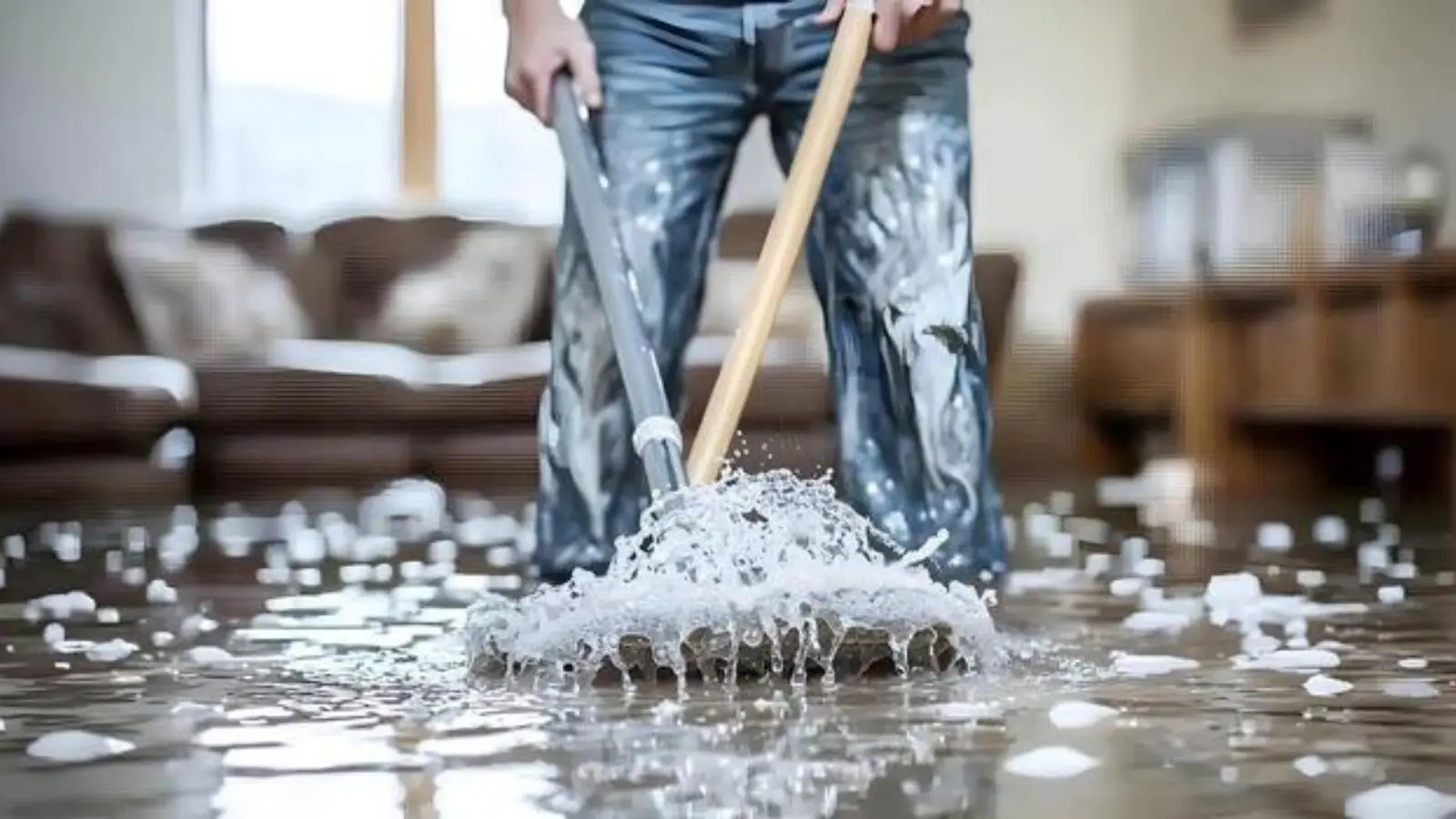
The first 48 hours after the water stops
Once the source is shut off, the clock keeps running. Wet drywall, carpet and cardboard begin to smell within a day or two, and contaminated water gets worse the longer it sits. Our dispatch line is open 24/7, and cleanup crews are sent the same day when they are available.
While you wait, open windows if weather allows, run a fan only on clean-water spills and keep children and pets out of affected rooms. Do not use a household vacuum on wet floors. Wear gloves and boots if you have to walk through the area, and wash hands afterward.
What cleanup means after water damage
Cleanup is the phase between stopping the water and rebuilding. It means removing materials that cannot be dried, cleaning and sanitizing surfaces, handling your belongings and controlling odor. It follows water mitigation, which stops the damage and dries the structure, and it comes before water damage repair, which rebuilds.
On many jobs the three overlap. The crew that pumps and dries also removes wet drywall and carpet pad, and the same visit may include cleaning. What matters is that the order is followed so nothing gets rebuilt over wet material.
Keep it or toss it: materials after water damage
This is the general rule of thumb used in the field. The crew confirms it on site because category and time matter.
| Material | After clean water | After contaminated water |
|---|---|---|
| Carpet | Often dried and cleaned | Removed and discarded |
| Carpet pad | Usually discarded | Discarded |
| Drywall | Dried if only the bottom inches are wet | Cut out and replaced |
| Insulation | Removed if soaked | Removed |
| Hardwood floors | Dried slowly, may cup | Often replaced |
| Upholstered furniture | Cleaned if caught early | Usually discarded |
| Books, papers, cardboard | Dried quickly or discarded | Discarded |
Hard, non-porous items such as glass, metal and sealed tile can usually be cleaned and kept.
Sanitizing and odor control
Water that sat in a house leaves a smell even after the visible damage is gone. Crews clean surfaces, apply antimicrobial treatment where the water category calls for it and use air scrubbers with HEPA filtration to pull particles out of the air.
Odors tied to wet materials usually clear once those materials are out and the structure is dry. Masking sprays only cover the smell for a few days. If an odor returns after cleanup, tell the crew, because it can point to moisture still trapped in a cavity.
What to keep for your insurance claim
Large losses need more paperwork. A written record starts with what you do on day one.
Claim documentation
- Photos and video of every affected room before cleanup starts.
- A list of discarded items with approximate age and value.
- Written scope of work from the crew, with equipment and days listed.
- Receipts for emergency costs like pumping, hotel stays and equipment.
- The date and time you noticed the water and when you called for help.
Why cleanup timing depends on the water source
Framingham's drinking water is supplied through the city Department of Public Works, with the supply purchased from the Massachusetts Water Resources Authority. A line failure inside the house starts out clean and then picks up dirt as it crosses flooring and insulation. After about a day or two it should be treated with more caution than it looked at first.
Flood water from a brook or river, or sewage from a drain, is contaminated from the start. The Division of Insurance notes that flood damage is generally excluded from standard homeowners policies, so find out which kind of loss you have before cleanup decisions are final.
What changes the cost of water damage cleanup
There is no flat rate that fits every loss. The factors below decide the scope, and a dispatcher explains how price is set before work starts.
| Factor | Effect on the job |
|---|---|
| Water category | Contaminated water adds protective steps and removal. |
| Area affected | More rooms mean more labor, more disposal and more equipment. |
| Materials involved | Porous materials cost more to replace than hard surfaces to clean. |
| Contents handling | Moving, cleaning and storing belongings adds to scope. |
| Drying and rebuild afterward | Cleanup leads into drying and repair, each its own scope. |
Insurance, in general terms: sudden and accidental water damage is often covered, gradual leaks and neglect often are not, and flood is usually excluded. Ask your insurer or check your policy.
Ready to start cleanup?
Call the 24/7 line. A dispatcher will ask what the water touched and how long it sat.
Where this fits with the rest of the work
If the water is still present, emergency water removal comes first. If a basement took flood water, the flood damage restoration page explains the extra steps. Cleanup crews also work in Natick and the other nearby towns we serve.
Frequently asked questions
Yes. The dispatch line is open every hour of every day. Cleanup calls are arranged for the same day when crews are available, and the dispatcher will tell you honestly if it will be longer.
Small clean-water spills caught within hours can be handled with towels, a wet vacuum and fans. Anything that soaked into walls or flooring, or any contaminated water, is best left to a trained crew.
Mold needs moisture and time. Materials that stay wet more than a day or two are at risk, which is why drying and cleanup start quickly.
Carpet pad, soaked insulation, drywall touched by contaminated water and porous items that cannot be cleaned. The crew explains each decision on site.
Often, when the cause is sudden and accidental. Flood is usually excluded from standard homeowners policies. Check your policy, take photos and ask your insurer what they require.
Usually once wet materials are removed and the structure is dry. If an odor lingers, tell the crew so they can check for trapped moisture.
Water still spreading? Call (508) 446-9244 and a dispatcher answers around the clock.