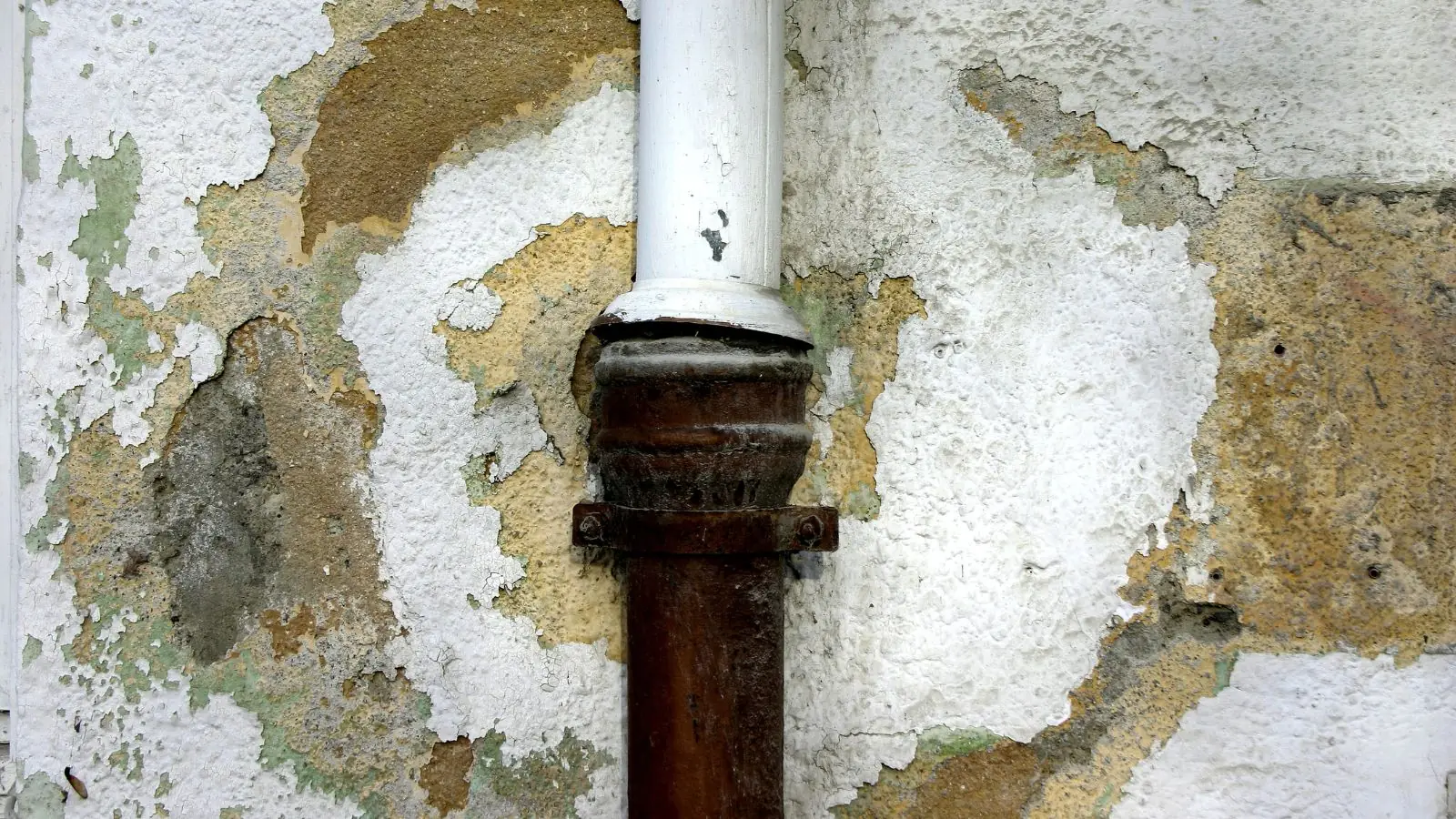
How to tell whether a wall can be saved
Start with the wall itself. Press it with your hand. If it feels firm and cool but dry after a few days, the damage may be cosmetic. If it feels soft, crumbles or shows a visible bulge, the material has absorbed more water than it can release.
Then check how high the water climbed. Drywall wicks moisture upward, often a foot or more above the line you can see. A stain at knee height can hide wetness at waist height. Moisture meters and a thermal camera show the real extent without opening the whole wall.
As a rule, wet drywall that has been soaked, has sagged or has been wet for more than a day or two is replaced. Wet drywall that was caught quickly can sometimes be dried in place when the cavity behind it can also be dried.
What different wall symptoms usually mean
Symptoms help point to the cause and the right next step.
| What you see | What it suggests | Typical next step |
|---|---|---|
| Brown ring stain, dry to the touch | An old or intermittent leak that stopped | Find and fix the source, then paint with a stain blocker after the wall tests dry. |
| Bubbling or peeling paint | Moisture behind the paint, often from a recent or ongoing leak | Moisture reading and a look inside the cavity. |
| Soft or crumbling drywall | Water has soaked the gypsum and paper | Cut out and replace, after drying the framing. |
| Wall feels cool and damp | Water or high humidity in the cavity | Thermal imaging and drying equipment. |
| Musty smell with no visible stain | Hidden moisture, possibly growth in the cavity | Moisture mapping and inspection before any closing up. |
| Warped baseboard or trim | Water at floor level has wicked into trim and wall bottom | Remove trim, check the cavity and dry. |
Find the source before touching the wall
Every water-damaged wall has a cause. A supply line, a drain, a window, a roof leak, a failed seal around a tub or a damp slab can each produce the same stain. If the source is not found, any repair is temporary.
Watch the stain for a few days. If it grows after the weather has been dry, the source is plumbing. If it grows after rain, look at flashing, gutters and exterior walls. A plumber, roofer or restoration crew can use moisture mapping to trace the path.
Drywall repair comes last. It makes no sense to paint over a wall that is still taking water.
How a wall is dried, opened and rebuilt
The sequence is the same in a bathroom and a basement, though the materials differ.
Stop and map
The leak is stopped and technicians map moisture across the wall, the floor beside it and the ceiling above.
Open what has to be opened
Baseboards are removed, and holes are cut so air can reach the cavity. Wet insulation is pulled out.
Dry with air movers and dehumidifiers
Equipment stays in place until the framing and remaining drywall reach a dry standard. Readings are logged each visit.
Remove what cannot be dried
Swollen or crumbling drywall is cut back. Cuts are made in clean lines to make the patch easier.
Rebuild
New insulation, drywall, taping, priming and paint finish the job. This step belongs to water damage repair, and it should start only after the structure tests dry.
Plaster, drywall and paneling dry differently
Modern drywall is paper over gypsum and takes up water fast. Older plaster is thicker and may dry more slowly, but it can also hold water behind a surface that looks sound. Paneling, plywood and wood trim react differently again.
If your home has more than one wall type, ask the crew to explain how each will be treated. In any older home, including those in historic areas like Saxonville and Framingham Centre, it is smart to let technicians check readings before deciding that a wall is fine.
Why drying comes before painting
Paint and stain blockers hide marks. They do not dry a wall. If a wall is painted before the cavity is dry, moisture stays trapped, paint peels again and mold can grow behind the surface.
That is why water mitigation comes before any rebuild. A drying log with readings from the first and last visit is the evidence that the wall is ready. Ask to see it before drywall goes up.
If wall moisture has been present for a while, ask whether the crew sees signs of growth. Growth calls for containment and the S520 standard, not a quick wipe.
Framingham permits for wall and framing repairs
The City of Framingham Inspectional Services Division issues building permits. Since July 1, 2025, permitting runs through an online portal that requires an applicant account. Most simple drywall patching does not alter structure, but replacing framing or changing walls can.
Permit rules vary with the scope of the work, so ask the division before a larger repair begins. The main number is 508-532-5500, and the office is at 150 Concord Street. A contractor doing structural work normally handles the permit, and you can ask to see it.
Cosmetic repair after a small, dry leak is a different case from rebuilding a wall after a flood. When in doubt, ask first.
Wall still wet or soft?
Call dispatch. A crew can read moisture levels and tell you what can be dried and what has to come out.
When a repair needs more than a patch
If water came through a wall from above, check the ceiling and the floor. If it came from the outside, inspect the siding, windows and flashing. In basements, the problem may be groundwater, which calls for drainage fixes beyond restoration.
Homeowners in Sudbury and Southborough often hear the same advice. Dry first, repair second, and do not close the wall until you can see dry readings.
Questions to ask a repair contractor
Ask who will confirm that the wall is dry and what readings they will show. Ask whether the cavity was inspected, what type of insulation will be used and who is pulling any required permit.
Request a written scope before work begins, with materials and the steps. A clear scope protects you if the job changes partway through.
Frequently asked questions
Only if the source is fixed and the wall tests dry. Painting over a damp wall traps moisture and the stain usually comes back. Use a stain-blocking primer after the cavity is verified dry.
A small clean-water leak caught early can dry in a few days. Larger losses and thicker materials take longer. Drying is complete when moisture readings reach the dry standard, not after a set number of days.
Permit rules vary with the scope. Simple patching often does not alter structure, but framing, wiring or plumbing changes can require permits. Ask Framingham Inspectional Services at 508-532-5500 before work begins.
No. Soft drywall means it absorbed water. Growth may or may not be present, and only inspection can tell. If the wall has a musty smell or visible spotting, mention it so the crew plans containment.
Emergency drying is available 24/7 through dispatch. Repair work such as drywall and painting is scheduled after the structure is dry. If water is still active, call right away.
Water still spreading? Call (508) 446-9244 and a dispatcher answers around the clock.