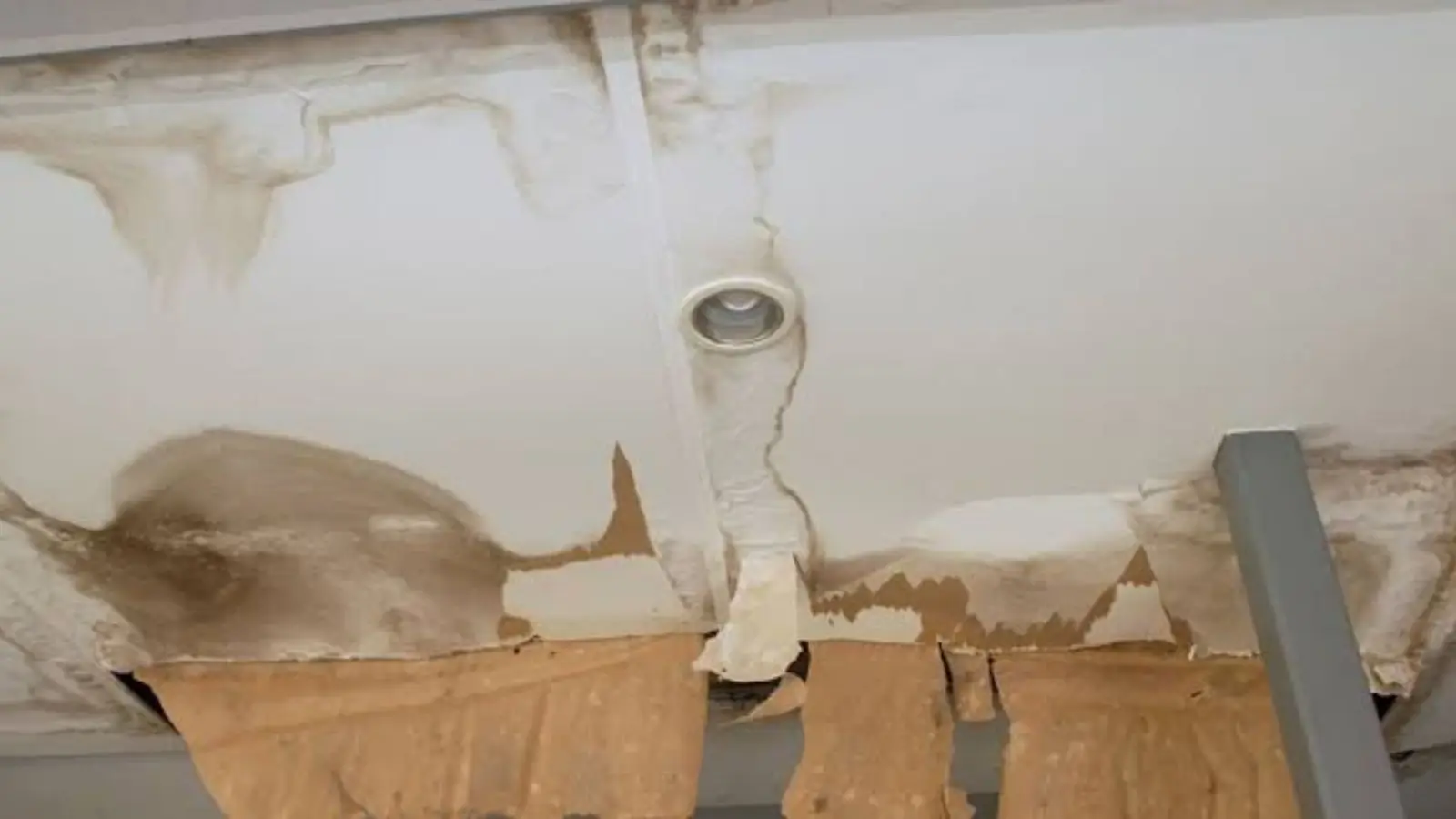
What to do first when a ceiling is wet
Water damage ceiling repair starts with safety, not paint. Find and stop the source, keep people out from under a sagging section and do not poke at a bulge with your hand. A ceiling holding water can release it all at once, and wet drywall is heavy.
If the ceiling is bulging, a small hole at the lowest point lets the water drain into a bucket in a controlled way. Wear eye protection and stand to the side. Turn off power to any light fixture in the wet area if you can reach the panel on dry ground, and call 911 or the utility if you see sparks or smell burning.
Once the water is stopped, drying comes before repair. Repairing a ceiling while the cavity above it is wet traps moisture and brings the stain right back.
Ceiling damage by stage, and the usual repair path
| What you see | What is going on | Usual path |
|---|---|---|
| Light brown stain, ceiling firm | Short or small leak, drywall not saturated | Fix source, dry, seal stain, repaint |
| Stain that keeps growing | Active or repeated leak above | Find source first, open and dry, then repair |
| Bulging or sagging drywall | Drywall holding water | Controlled drain, remove section, dry cavity |
| Peeling paint, soft spots | Material weakened by moisture | Remove affected drywall, check insulation |
| Fallen section | Drywall failed | Safety clear, remove damaged area, dry, rebuild |
A crew with a moisture meter and thermal camera confirms how far the water traveled above the ceiling.
How a ceiling gets repaired in the right order
Find and fix the source
A roof leak, a plumbing line in the floor above and a bathroom fixture all leave similar stains. A repair that skips this step will not last.
Dry the ceiling and the cavity above
Wet insulation and framing are dried or removed. Air movers and dehumidifiers work on the space, and moisture readings tell the crew when it is done.
Remove damaged drywall and insulation
Sagging or saturated drywall comes out in clean sections. Wet insulation is removed because it holds water and loses effectiveness.
Rebuild with new drywall
New drywall is hung, taped and finished so the repair blends into the ceiling plane.
Prime, texture and paint
Stain-blocking primer goes on before paint so the old stain does not show through. Texture is matched to the rest of the ceiling.
Why a stain-blocking primer is not a repair
Painting over a water stain is the most common shortcut and the least reliable. A stain-blocking primer covers the color, but if the drywall is soft or the cavity is wet, the problem is still there. Paint might hold for a few weeks and then bubble.
Treat the primer as the last step of a repair, not the first. Moisture readings from the ceiling and the cavity above should match readings from a dry area before anything gets covered. If anyone offers to paint over a wet ceiling the same day, ask them how they confirmed it is dry.
Ceiling repair is part of water damage repair, and it follows drying. If the leak came from above and the water was still active, see water mitigation for the drying phase.
Winter ceilings and ice dams
In Massachusetts winters, ceiling stains often come from ice dams, where melting snow refreezes at the roof edge and backs water under shingles. The Massachusetts Division of Insurance notes that ice dam damage may be covered if it is sudden and not caused by a lack of maintenance.
That phrase matters. Gutters, roof condition and attic insulation are the kind of maintenance an insurer may ask about. Photograph the ceiling, the roof edge and the attic before cleanup, and keep records of any roof or gutter work done in the past.
Do not climb onto an icy roof to chip at ice. If water is coming in, protect the room below, keep the ceiling area clear and call for help.
Checking the attic and cavity before the ceiling is closed
Before new drywall goes up, someone should look above the ceiling. Wet insulation, damp framing and stained roof sheathing all show where the water came from and whether it has stopped. Closing the ceiling over a wet cavity brings the stain back and invites mold.
Wiring that ran through the wet area should be checked by an electrician, especially if a light fixture was affected. Bath fans and vent ducts that leak condensation can cause repeat stains, so confirm they are connected to the outside rather than ending in the attic.
Ask for moisture readings of the framing above the ceiling and keep them with your records.
If the leak came from a roof, ask the roofer to confirm the repair before the ceiling is rebuilt. Rebuilding first and fixing the roof second is a common and expensive order of work, since the next rain can undo the new drywall.
Permits and local questions in Framingham
This section draws on the City of Framingham Inspectional Services page. The division handles building, electrical and plumbing permits and inspections, and permit applications go through the city's online portal. The office is at 150 Concord Street, Room 203, and the main phone is 508-532-5500.
A simple drywall patch and repaint generally differs from a project that opens framing, moves wiring or replaces roofing. Permit rules vary by scope, so call Inspectional Services before the work begins and ask whether your project needs a permit. If a contractor says no permit is needed for work that touches electrical or structural parts, ask them to confirm with the city.
Neighboring towns such as Natick and Ashland have their own building offices and their own permit rules, so check with the town where the home sits.
Ceiling wet or sagging?
Call the 24/7 line. A crew can assess how far the water traveled before repairs begin.
Frequently asked questions
Yes. A bulging ceiling can release water and fall without warning. Keep people out from under it, stop the source if you can and call for help. A controlled drain at the lowest point lowers the risk.
Not until the ceiling and the cavity above are dry and the source is fixed. Painting over a wet ceiling traps moisture and the stain returns.
Start above the stain: roof, attic, bathroom, laundry or kitchen plumbing. A moisture meter and thermal camera can trace water that traveled sideways along framing.
It often does when the cause is sudden and accidental. Gradual leaks and maintenance issues are commonly treated differently. Check your policy and photograph everything before cleanup.
It depends on the scope. Simple patching is different from work that touches wiring, structure or roofing. Call Inspectional Services at 508-532-5500 and ask before work begins.
Water still spreading? Call (508) 446-9244 and a dispatcher answers around the clock.