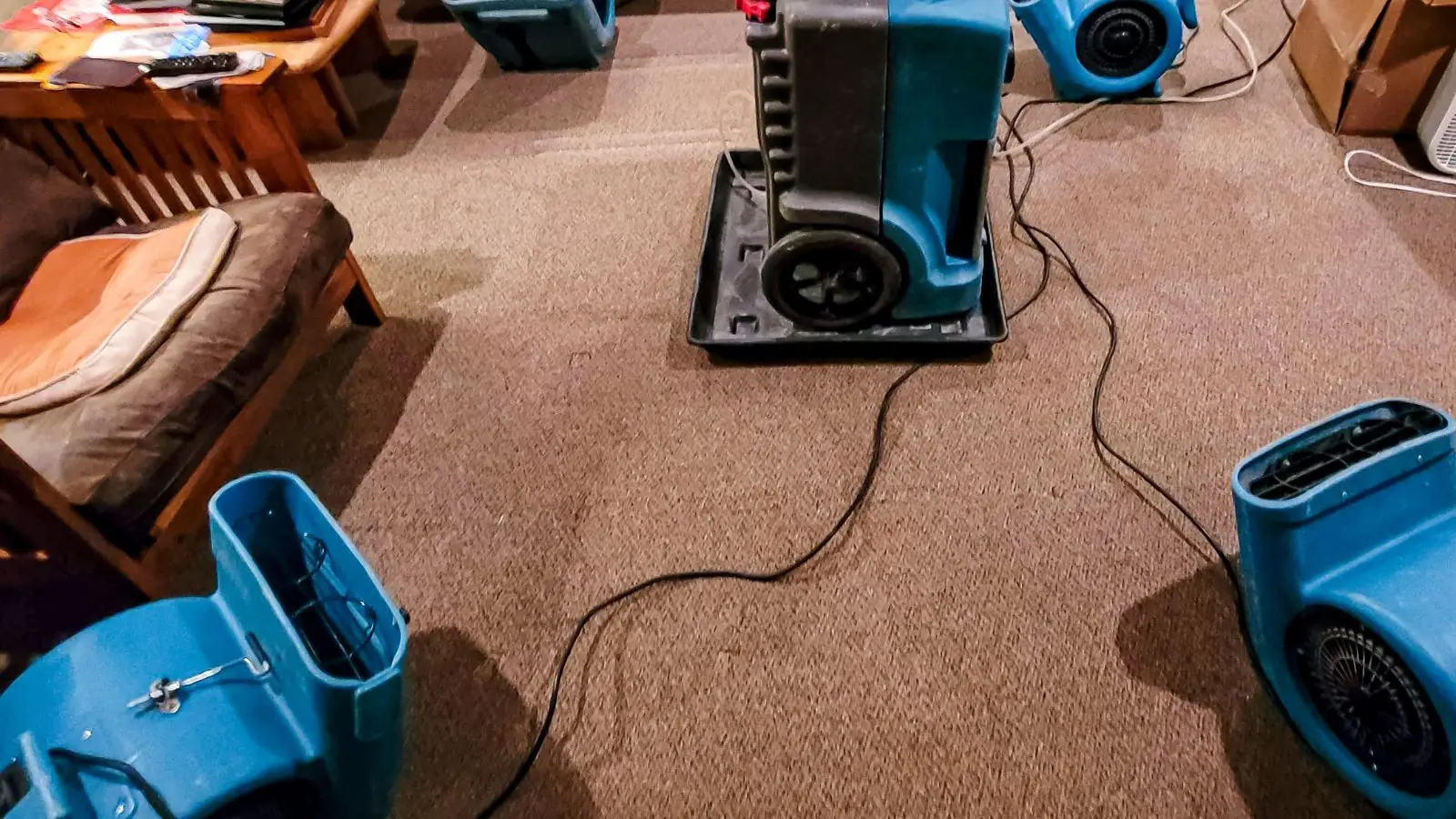
What structural drying services actually include
Structural drying services remove moisture from the parts of a building that hold water after a leak or flood: wall framing, subfloor, drywall, plaster, insulation and the layers under flooring. A crew sets air movers and dehumidifiers, measures moisture each visit and adjusts the setup until the materials reach a dry standard.
That is the short answer for any Framingham homeowner. The longer answer is that drying is a measured process, not a fan left running in a corner. A finished surface can feel dry to the touch while the cavity behind it stays wet, and wet framing is what leads to swollen wood, peeling paint and mold.
If water is still spreading, stop reading and call. Shutting off the source comes first, and our dispatch line runs 24/7. The rest of this guide is for the days after, when you are deciding who to trust with the drying.
The equipment and the job each piece does
Most drying jobs use four or five kinds of equipment. Knowing the names helps you read an estimate and spot a setup that does not match the damage.
| Equipment | What it does | What to ask the crew |
|---|---|---|
| Moisture meter | Reads moisture in drywall, wood and subfloor so wet areas can be mapped. | Can you show me the readings and the dry reference? |
| Thermal imaging camera | Shows temperature differences that point to water behind surfaces. | Which areas did the camera flag, and did you confirm them with a meter? |
| Air mover | Pushes dry air across a wet surface to speed evaporation. | Where is each unit placed, and why there? |
| LGR dehumidifier | Pulls moisture out of the air so materials keep releasing water. | How many units, and what is the room humidity target? |
| Wall cavity drying kit | Moves air inside a wall through small openings. | Are you drilling or removing baseboard, and where? |
Equipment counts are set by the size and type of the loss. A dispatcher can explain how scope and price are set before any work begins.
How a drying job runs from day one to sign-off
Day one: map and set up
The crew finds the wet areas, removes materials that cannot be dried, and places air movers and dehumidifiers. Readings are recorded as the starting point.
Daily visits: measure and adjust
A technician returns to read moisture again. Equipment is moved, added or removed based on what the numbers show, not on a calendar.
Opening up when needed
If a wall cavity or floor assembly is not responding, the crew opens a small section so air can reach the wet material directly.
Final readings and equipment removal
When the materials reach the dry standard, the equipment comes out and you receive the documented readings. Rebuild work can begin after this point.
Signs drying is going well, and signs it is not
You do not need technical training to judge a drying job. A few visible habits tell you a lot about whether the crew is following a plan.
- Good: technicians come back on a schedule and write numbers down each time.
- Good: equipment moves around as the wet area shrinks.
- Good: the crew explains what a reading means in plain words.
- Warning: equipment is dropped off and nobody returns for days.
- Warning: one fan is pointed at a large wet wall with no dehumidifier in the room.
- Warning: you are told the job is done on a fixed day count with no final readings.
ANSI/IICRC S500 is the published industry standard for professional water damage restoration, and it describes this measure-and-adjust approach. You can ask any company whether its crews work to S500 and how they document the result.
What decides how long structural drying takes
Homeowners often ask for a number of days, and an honest answer is a range that depends on the building. Thick, dense materials such as hardwood, plaster and plywood subfloor release water slowly. Carpet and thin drywall dry faster. Water that has had more time to soak in takes longer to come back out.
Humidity matters too. A damp, closed-up house in a muggy stretch of summer gives the dehumidifiers more to do than a cold, dry January day, so the same loss can run longer in July. Open windows rarely help, because they let outside moisture in.
The category of water changes the plan rather than the length. Clean supply-line water can often be dried in place. Water that picked up contaminants may require removing porous materials first, which then shortens the drying phase for what remains.
Where drying ends and repair begins
Structural drying is one piece of water mitigation, and it stops at dry framing and subfloor. It does not replace removed drywall, install new flooring or repaint. Those steps belong to water damage repair, and starting them early can seal moisture inside a wall.
Plan the handoff before drying begins. Ask whether the same company will do the rebuild, whether the final moisture readings will be provided in writing, and how long the equipment is expected to stay. Keep those readings with your insurance paperwork.
Why saturated ground matters in Framingham
This note draws on a federal source, the U.S. Geological Survey report on the 2010 flood in Massachusetts. USGS found that rainfall from late February through late March 2010 totaled roughly 17 to 25 inches across southern New England. Of 37 streamgages in central and eastern Massachusetts, 13 recorded record or near-record peak flows, and most peaked in mid-March.
The practical lesson for a Framingham homeowner is that ground can stay saturated for weeks after heavy rain, and wet ground keeps pushing moisture toward basement walls and slabs. Drying a basement while the soil outside is still soaked takes longer, and readings can rebound if the wet period continues. Ask the crew to recheck a few days after equipment comes out.
Towns nearby see the same pattern, and our crews also work in Natick and Wayland, where basements near lakes and the Sudbury River corridor face the same slow rebound after long wet stretches.
Need drying started today?
Call the 24/7 line. A dispatcher will explain how scope and price are set before work starts.
Frequently asked questions
Structural drying is one part of water mitigation. Mitigation also includes stopping the source, pulling out standing water and removing materials that cannot be saved. Drying is the longest phase and the one that runs on equipment and measurements.
For a small clean spill caught right away, rented equipment can work. For water inside walls or under flooring, the hard part is measuring where the moisture is and knowing when it is gone. Without a meter and a plan, it is easy to stop too early.
Yes, air movers and dehumidifiers draw power for several days. Ask the crew how many units they plan to run and for how long, and mention the electric use to your insurer if you have a covered claim.
Ask for the final moisture readings and the dry reference they were compared against. Readings that match unaffected areas of the same material are what a finished job looks like.
Recheck a few days after the equipment leaves, and again after the next stretch of heavy rain. If the ground outside is still saturated, readings can climb back, and a crew can return to dry the area again.
Water still spreading? Call (508) 446-9244 and a dispatcher answers around the clock.