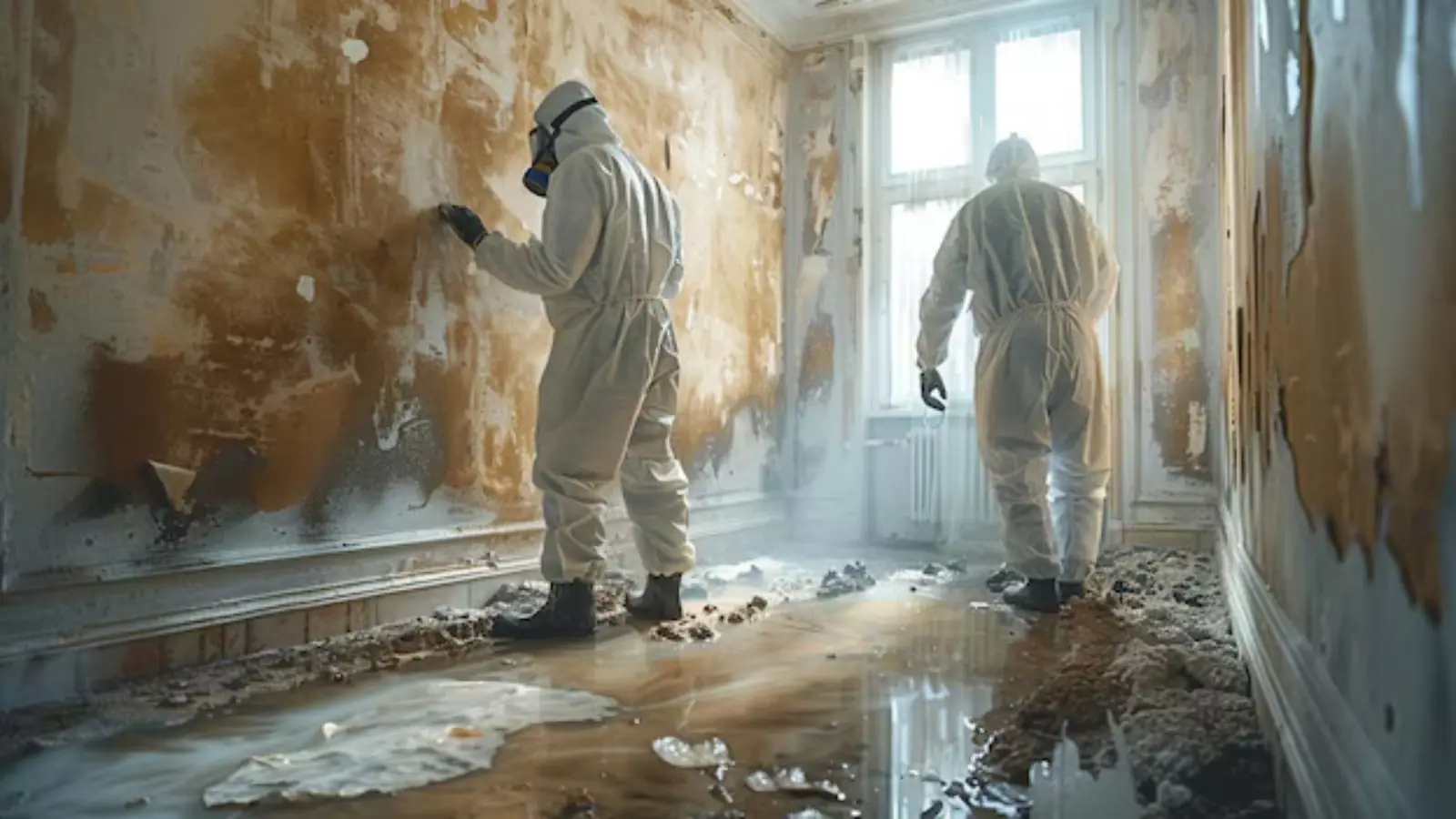
The short answer: find the moisture, then decide what can be cleaned
Small patches of surface mold on a hard, nonporous basement wall, such as sealed concrete or painted block, can often be cleaned by a homeowner with detergent, water and a stiff brush. Mold on porous materials, including drywall, insulation, carpet and unfinished wood, is a different story, because the growth goes below the surface and those materials are usually removed.
Whatever you clean, the wall will stay a problem until you find the water. Mold needs moisture, and cleaning a wall that keeps getting wet is a cycle that repeats. Condensation, a leaking pipe, groundwater seeping through block and a gutter dumping next to the foundation are the usual suspects.
If you are not sure how far the growth goes, if the area is large or if the basement flooded recently, call a professional. Questions about how mold affects anyone's health belong with a physician, not a cleaning guide.
What a homeowner can handle and what needs a crew
| Situation | Reasonable approach | When to call a crew |
|---|---|---|
| Small spots on sealed concrete or painted block | Clean with detergent and water, dry fully, fix the moisture source | If it returns within weeks or spreads |
| Growth on drywall or paneling | Usually removal of the affected material | When the area is more than a small patch or the wall cavity may be wet |
| Musty smell with nothing visible | Check for hidden moisture behind finishes | If a meter shows wet materials or the smell persists |
| Growth after a flood or sewage backup | Treat as a flood cleanup first | Right away, with containment |
| Visible growth across a large area | Not a DIY job | Call before disturbing it, because scrubbing spreads spores |
Ask any company whether its crews follow ANSI/IICRC S520, the published industry standard for mold remediation.
A careful order for dealing with basement wall mold
Protect yourself
Wear gloves, eye protection and a respirator rated for fine particles. Never mix cleaning products, because some combinations release harmful fumes.
Find and fix the moisture source
Check pipes, the dryer vent, the sump pump, window wells and the grade outside. Dry the space with a dehumidifier while you investigate.
Contain the area
Close doors, shut off the HVAC to that space and hang plastic if you can. Scrubbing dry mold throws spores into the air.
Clean hard surfaces
Scrub with detergent and water, wipe, and let the surface dry completely. Dispose of rags in a sealed bag.
Remove porous materials that cannot be cleaned
Cut out and bag affected drywall, insulation and carpet. Do not try to wash these and put them back.
Dry to a measured standard
Use a moisture meter, or have a crew do it, to confirm the wall is dry before painting or finishing.
Why bleach and paint do not solve it
Pouring a strong chemical on a wall can lighten the stain without fixing anything underneath. On porous materials the liquid soaks in and adds water to a surface that already has too much.
Painting over mold has the same flaw. Paint is not a repair. If the moisture is still there, the growth returns and peels the new paint. Fix the water, clean or remove the material, dry it and then finish.
A professional remediation plan follows the same logic with more control: containment, filtered air, removal of what cannot be cleaned and verification that the space is dry. If you want the full process, see our page on mold remediation.
Where the basement moisture usually comes from
Basements are the lowest part of a home, so they collect whatever water the ground, roof or plumbing sends their way. Look at the outside first: gutters that spill at the foundation, soil sloping toward the house and downspouts that end too close to the wall are all easy to correct.
Inside, check for a cold-water pipe that sweats in humid weather, a leaking washing machine hose and a sump pump that does not run when it should. A dehumidifier that fills quickly tells you the air is carrying more water than the room can shed.
If a leak or flood started the problem, drying the structure comes first. That is the job of water mitigation, and it should start before anyone talks about cleaning the mold itself.
Mistakes that make basement mold worse
Several well-meant habits feed the problem. Scrubbing dry mold without containment sends spores through the house. Running a box fan across the growth does the same. Storing cardboard boxes directly on the floor gives mold fresh material, and closing up a damp room with a space heater adds warm, wet air to the mix.
Another frequent error is treating a musty smell as a cleaning issue rather than a clue. The smell usually points to moisture somewhere you cannot see, such as behind paneling or under carpet. Pull back a corner, check with a meter and follow the water.
Finally, avoid finishing the basement before it has been dry for a reasonable stretch. New drywall over a wall that is still releasing moisture can grow the same problem all over again, at a much higher cost to remove.
Floodplains, dams and basement moisture in Framingham
This note draws on a municipal source: the slide deck from the City of Framingham's July 2022 public meeting on updating its Hazard Mitigation Plan. The deck lists flooding among the city's natural hazards, including riverine flooding, dam failures and ice jams, and includes a map showing the 100-year floodplain using FEMA data.
For a homeowner with a damp basement, the useful step is to check your own address on the FEMA flood map and see whether any part of your property falls in a mapped flood area. A basement in or near that area is more likely to take on water from the ground, and mold treatment will not last unless the water issue is addressed too.
State rules on who may do mold work vary, so ask whether your state licenses mold work and request proof before hiring. The same advice applies in nearby towns such as Wayland and Southborough.
Mold on a basement wall?
Call the 24/7 line. A dispatcher can explain how assessment and scope are set before any work begins.
Frequently asked questions
Small spots on hard, sealed surfaces can often be cleaned with detergent and water if you fix the moisture source and dry the area. Larger areas, porous materials and mold after a flood are better left to a crew.
It can lighten a surface stain, but it does not fix the moisture and soaks into porous materials. Detergent, scrubbing and drying are the usual approach for hard surfaces.
Probe the material gently. Soft, crumbling or swollen drywall and wood usually means growth beneath the surface. A moisture meter helps confirm whether the wall is still wet.
A dehumidifier lowers humidity and helps stop growth from spreading, but it does not remove existing mold. Cleaning or removing the material is still needed.
Use the FEMA Flood Map Service Center to look up your address. The city's hazard planning also maps the 100-year floodplain. If your property is near a mapped area, ask your insurer what is covered.
Water still spreading? Call (508) 446-9244 and a dispatcher answers around the clock.