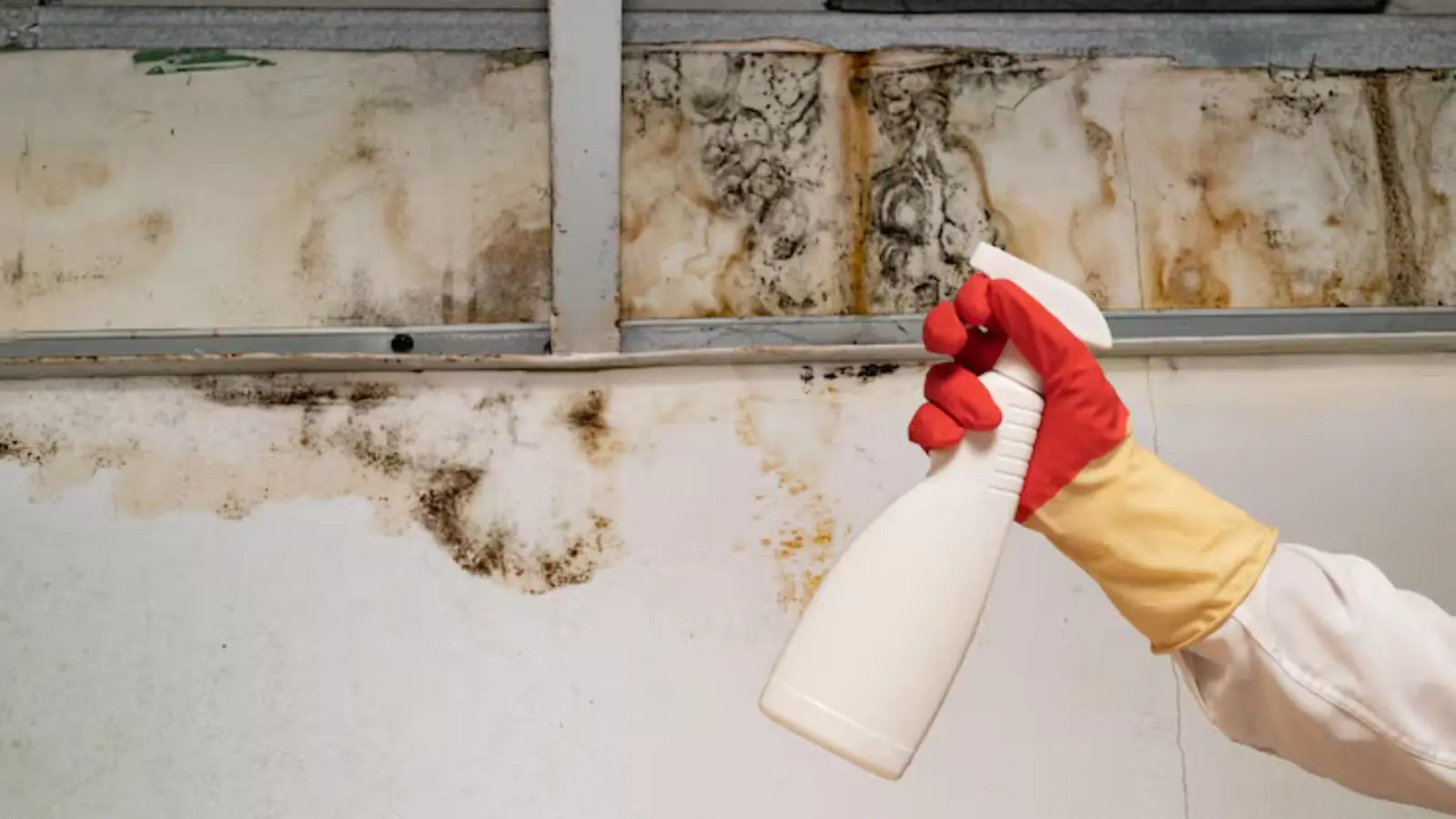
Can moldy wood be saved?
Often, yes. Solid framing lumber and subfloor boards are dense enough that surface growth can be cleaned if the wood is still sound. What matters is how deep the damage goes, how long the wood was wet and whether the moisture source is fixed.
A crew checks by probing the wood with a tool. If it stays firm and the surface cleans up, the wood stays. If it is soft, crumbles or has lost strength, it is cut out and replaced. Sheet goods such as OSB and plywood are less forgiving than solid lumber, and particleboard is the least forgiving.
Because structural wood carries load, the decision to keep or replace it should be made by someone looking at it, not by a photo.
Wood types and how crews usually approach them
This table shows the general pattern. Each house gets its own assessment.
| Wood | Where you find it | Usual approach |
|---|---|---|
| Solid lumber framing | Joists, studs, sill plates | Clean the surface and dry. Replace sections that are soft or have lost strength. |
| Plywood and OSB subfloor | Under flooring, in attics | Clean and dry if sound. Replace if swollen, delaminated or soft. |
| Hardwood flooring | Living areas, upper floors | Dry quickly if possible. Boards that cup, buckle or stain deeply are often replaced. |
| Particleboard cabinets and shelving | Kitchens, laundry rooms | Usually replaced once saturated. |
| Trim and baseboards | Throughout | Often removed to dry the wall behind, then reinstalled or replaced. |
Why moisture content matters more than appearance
A board can look clean and still be wet. Moisture meters measure how much water is in the wood, and crews compare the reading with a dry reference in the same house. When the wood reaches that reference, the conditions that feed growth are gone.
That is why drying equipment comes before any cleaning plan. Water mitigation with air movers and dehumidifiers brings framing and subfloor down to a dry standard. Cleaning wet wood wastes effort because growth is back in days if the moisture stays.
Finding the cause is part of the same step. A plumbing leak, a roof leak, a damp crawl space or poor ventilation each needs its own fix.
How remediation crews treat mold on structural wood
The work follows the ANSI/IICRC S520 standard for mold remediation, which describes containment, removal and verification.
Contain the area
The crew seals the work zone with plastic and runs negative air so disturbed spores do not drift into living space.
Remove what cannot be saved
Soft or compromised wood is cut out and bagged. Insulation and drywall that touched the growth are removed.
Clean the surviving wood
HEPA vacuuming and damp wiping remove surface growth. Some crews use controlled abrasive methods inside containment. The plan depends on the wood and the extent.
Dry and verify
Equipment dries the wood to the target reading. The crew documents readings and the visual result.
Close up when it is safe
Insulation, drywall and finishes go back only after the structure passes. Repair follows through water damage repair.
Hardwood floors: a special case
Hardwood reacts to moisture by swelling. Boards at the edges lift, centers dip into cups, and a flood can make the whole floor buckle. When water has run under the boards, the subfloor is wet too.
Fast drying can sometimes save a hardwood floor, using specialty equipment that dries from below. If dark staining or surface growth appears, sanding may remove it only when the stain is shallow. Deep staining or boards that do not return to flat usually mean replacement.
Ask the crew what they are measuring and what the readings are after each visit. A floor that looks flat on day two can still be holding water.
What to do if you find growth on wood
A few precautions keep the problem from spreading while you arrange help.
Before the crew arrives
- Stay out of the area and keep children and pets away.
- Do not scrub, sand or brush the wood, because that sends spores into the air.
- Do not run a fan that blows across the affected area into other rooms.
- Find and stop any active leak, and photograph the affected wood.
- Run a dehumidifier in the room if one is available.
- Note the date you first saw it and any recent leaks or floods.
Health concerns about mold go to a physician. Building questions go to a restoration crew.
Framingham notes: older buildings need a careful look
Framingham has historic areas, including Framingham Centre around Framingham Common and Saxonville, the old mill village. In any older home or converted building, the wood framing may have been exposed to moisture over many years, and there may be several layers of finishes.
That is not a statement about any specific house. It is a reason to let a crew open a section and read moisture before deciding whether to clean, dry or replace. Older lumber is often sturdy, but only probing and readings show whether a given beam is sound.
Ask your town's building department whether permits apply if structural members are replaced. Rules vary with the scope of the work, and the Framingham Inspectional Services Division at 508-532-5500 can answer for city properties.
Found growth on joists or subfloor?
Call dispatch for a moisture reading and an assessment of what can be saved.
Crawl spaces, basements and attics
Wood in basements and crawl spaces sits near soil and concrete, where moisture is more likely. Attics collect condensation in winter and leak water through roof penetrations. These are the usual places where framing shows growth.
If you see staining on joists in a basement, check for plumbing leaks and look at where gutters discharge. If an attic shows dark staining on sheathing, check ventilation and the roof. The cure for each is different, and cleaning alone does not fix any of them.
Owners in Ashland and Sudbury can reach the same crews through our dispatch line.
How to compare remediation quotes
A good scope names the area, the materials to be removed, the containment method, the standard followed and how the result will be verified. It should say whether the moisture source is part of the work or handled by someone else.
Be cautious of any contractor who promises that mold will never return. Control of moisture decides that, and an honest crew will tell you so.
Frequently asked questions
Often it can be cleaned if the wood is still firm and dry. Joists that are soft, crumble when probed or have lost strength are replaced. A crew probes the wood and takes moisture readings before deciding.
Sanding can remove shallow surface growth when done inside containment with proper filtration. Doing it without containment spreads spores. Deep staining usually means the wood is replaced.
Sometimes, if drying starts quickly and the boards have not cupped or buckled badly. Specialty drying equipment can help. Floors with heavy staining or boards that do not flatten out are often replaced.
Older construction varies from house to house, so crews assess each one. Opening a section and reading moisture shows what the framing and finishes are doing. Ask before work if permits apply to structural replacement.
Dispatch is open 24 hours a day. Mold remediation is typically scheduled, but active water is an emergency. Call right away if water is still spreading.
Water still spreading? Call (508) 446-9244 and a dispatcher answers around the clock.