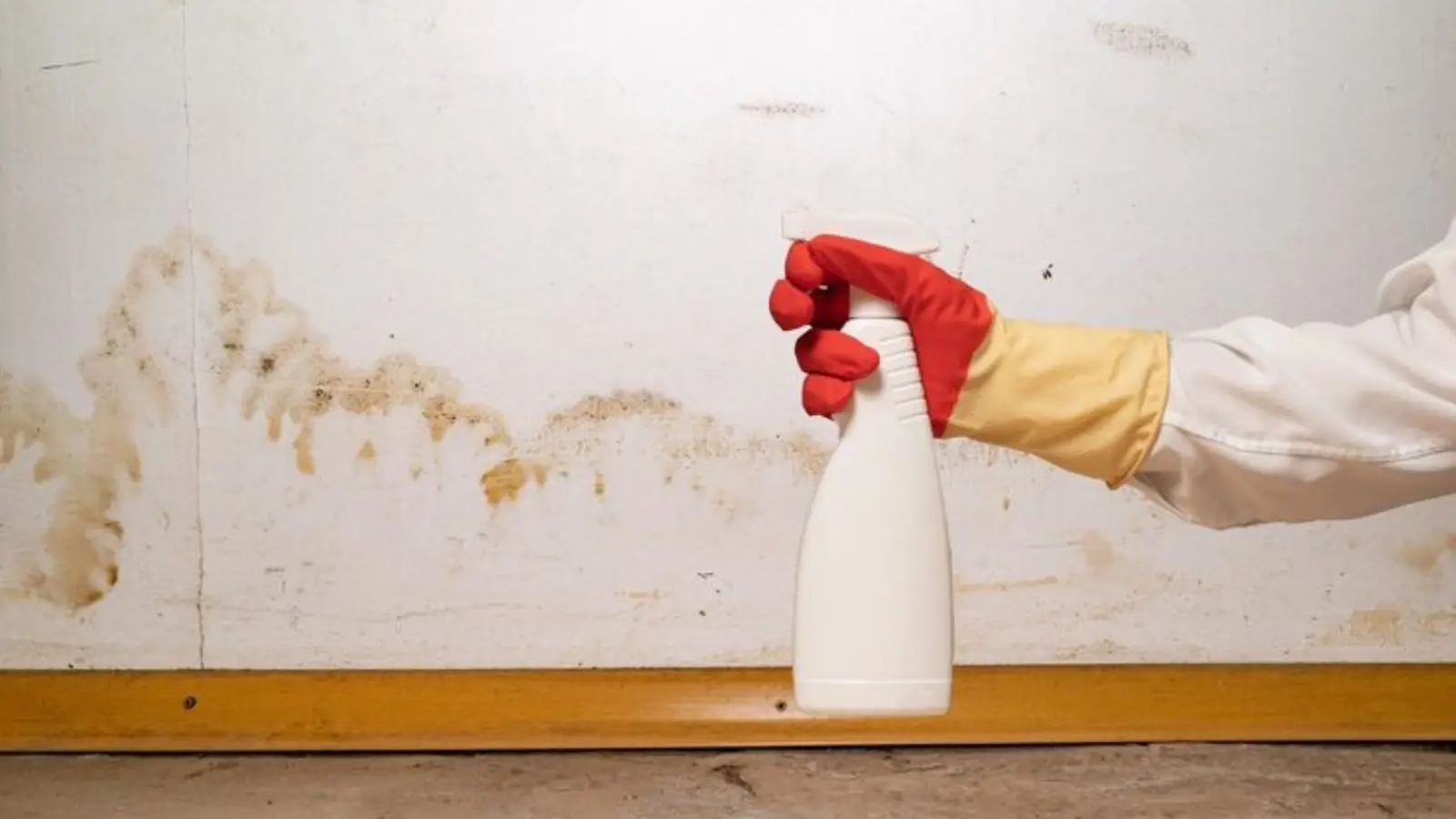
Where a product helps and where it stops
A cleaning product can remove surface growth from hard, non-porous materials such as tile, glass and sealed metal. For a small spot on a surface like that, careful cleaning is a reasonable step. The problem is that many mold problems are not on the surface.
Mold lives on whatever is damp and edible. Drywall paper, wood, insulation and carpet are all porous, and a spray reaches only the top layer. The growth underneath stays put, and if the material stays wet, new growth follows.
That is the real dividing line. Products address what you can see. Remediation addresses the moisture, the material and the spread.
Cleaning or calling a crew: a quick guide
Use this as a rough decision aid. When in doubt, a moisture reading settles the question.
| Situation | Reasonable on your own | Call a remediation crew |
|---|---|---|
| Small spot on tile, glass or sealed fixtures | Cleaning with protection and ventilation | If it returns quickly or the area is growing. |
| Spotting on painted drywall after a known, fixed leak | Possibly, if the wall is dry and growth is minor | If the wall is soft, has a musty smell or the leak was large. |
| Growth on carpet, pad or ceiling tile | Generally no, these are usually replaced | Yes. |
| Growth on wood framing or subfloor | Generally no | Yes, so the extent can be assessed and treated. |
| Any growth after a flood or sewage loss | No | Yes. These losses need containment and removal. |
| A musty smell you cannot trace | No, find the source first | Yes, for moisture mapping. |
Why moisture decides everything
Mold needs moisture. If a leak, condensation or high humidity feeds the same spot, growth returns after every cleaning. You can wipe a wall weekly and never solve it.
The first step in any mold plan is finding and stopping the water. Then materials are dried, which is why water mitigation usually comes before any mold work. Without that, a clean surface sits on a damp structure.
No honest contractor can promise that mold will never come back, because that depends on moisture control after the job. What a good crew can do is remove the growth, fix or flag the cause and verify the result.
If you decide to clean a small spot yourself
These steps lower the chance of making a small problem larger.
Safe handling for a small, hard-surface spot
- Fix the moisture source first, and confirm the area is dry.
- Open a window or run an exhaust fan, and keep the area closed off from the rest of the house.
- Wear gloves, eye protection and a mask rated for dust.
- Use one product at a time and follow its label. Never mix cleaning products, because some combinations release hazardous fumes.
- Do not dry-brush or sweep growth, because that sends spores into the air.
- Bag and dispose of cleaning rags, and wash your hands and clothing afterward.
- Recheck the area over the next weeks and stop if it returns.
Questions about how mold affects a person's health belong with a physician. A product label and a cleaning crew cannot answer them.
What remediation actually involves
Professional mold remediation follows the ANSI/IICRC S520 standard. It starts with an assessment of how far growth extends and what moisture is feeding it. The crew then sets containment, usually with plastic barriers and negative air, so spores do not travel to clean rooms.
Affected porous materials are removed and bagged. Hard surfaces are cleaned with HEPA vacuuming and damp wiping according to the plan. Air scrubbers run during the work. Afterward the crew verifies the result, and you can ask what they check and how they document it.
Our mold remediation service handles this work, usually alongside drying when water caused the problem. Ask any company whether its crews work to S520.
Framingham notes: renters, landlords and city inspectors
The City of Framingham Inspectional Services Division handles code and nuisance enforcement as well as building, plumbing and gas permits. If you rent and growth in your unit is tied to a leak or a building problem, that division is a place to ask who to contact and what applies. The main number is 508-532-5500.
Rules on who pays for cleanup and what a landlord must do depend on your lease and on state and local law, and a lawyer or tenant resource can explain them. What a restoration crew can do is document the moisture and the growth in writing.
For owners, ask whether your state licenses mold work before you hire. Requirements vary by state, and asking the question protects you.
Reading the label on a mold product
Labels use words like kills, removes, blocks and prevents, and they mean different things. A product that removes a stain has not necessarily dealt with growth beneath it. A product that claims to prevent growth works only while a surface stays clean and dry.
Check which surfaces the product is made for, how long it must stay wet on the surface and whether it needs rinsing. Check the safety directions too, including ventilation and protective gear. Products made for bathroom tile are not meant for framing, carpet or insulation.
A label cannot see behind the surface. Only a moisture reading and an inspection can show how far a problem goes, which is why many homeowners start there and decide on the product afterward.
Not sure how far it goes?
A moisture reading shows what is wet behind the surface. Call dispatch to arrange one.
Questions worth asking before you buy a product or hire a crew
Ask how the product is meant to be used and what surfaces it is made for. Ask a contractor what standard they follow, what they will remove and what they will clean. Ask for a written scope and how they confirm the result.
Residents of Natick and Wayland who find growth after a leak get the same advice. Handle the water first, then decide whether cleaning or remediation fits.
Frequently asked questions
Neither solves a mold problem on porous material. Liquids stay on the surface and add moisture, and growth often sits below it. If drywall is stained and soft, replacement and drying are usually better than spraying.
Flood and sewage water involve contamination beyond mold, and porous materials are normally removed. Sprays do not replace that work. Start with drying and removal, then ask a crew what cleaning is appropriate.
No product can promise that. Growth returns when moisture returns. The lasting fix is controlling the water source and keeping materials dry.
The Inspectional Services Division handles code and nuisance enforcement, and its main number is 508-532-5500. Ask what applies to your situation and keep photos and dates of what you see.
Dispatch is open 24 hours a day. Mold is usually planned work, but active water is urgent. Call, describe what you see and a crew is arranged as soon as one is available.
Water still spreading? Call (508) 446-9244 and a dispatcher answers around the clock.