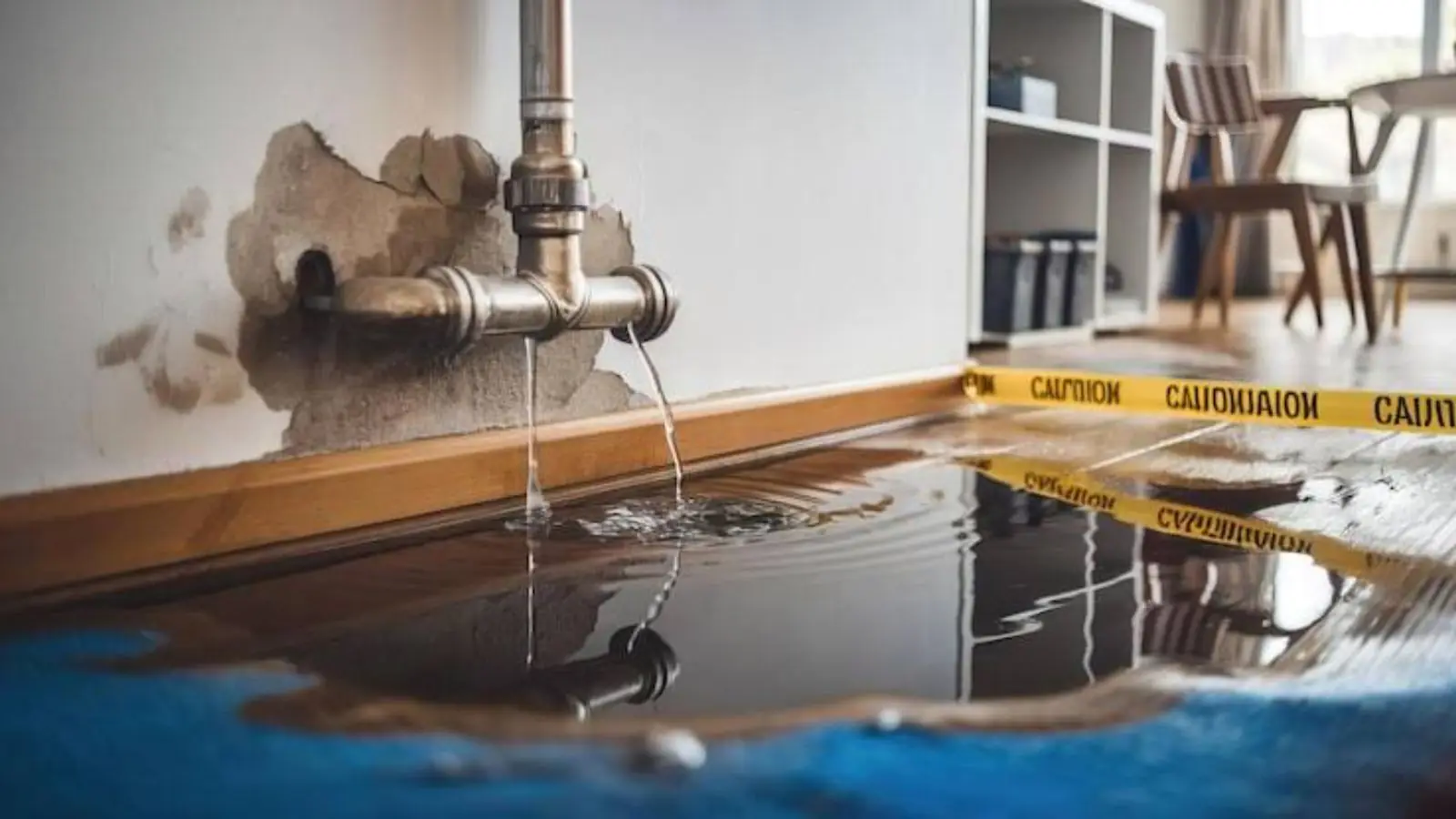
What to do the moment a pipe bursts
Shut off the main water valve first. It is usually near where the water line enters the house, often in the basement or utility area. Turning it clockwise stops the flow, and every minute it runs adds to the damage.
Next, open a faucet at the lowest point to drain what remains in the lines, and turn off power to wet areas only if you can reach the panel while standing on dry ground. If water is near outlets or the panel, stay out and call the utility or 911. Move rugs, electronics and valuables out of the way, and call our 24/7 line so a crew can begin pulling water out.
Do not use an open flame to thaw pipes, and do not turn the heat up expecting the water to dry itself.
The first hour after a burst pipe
Shut off the water
Close the main valve. If you cannot find it or it will not turn, call for help and keep people away from the wet area.
Drain the lines
Open the lowest faucet and any outdoor spigots so water leaves the system, which also relieves pressure.
Make the area safe
Stay clear of electrical hazards. Lift valuables, and put towels or buckets where water is pouring.
Photograph everything
Capture the burst section, the water spread and damaged belongings before cleanup.
Call your insurer and a crew
Report the loss and start water extraction and drying. Delay lets water soak into framing and flooring.
Why burst pipes cause so much damage so fast
A split in a supply line can release water at household pressure for as long as nobody notices. Pipes in exterior walls, attics, crawl spaces and unheated garages are the usual failures in a cold snap, and the break often happens hours before the thaw makes it visible.
Water follows framing, wiring holes and plumbing penetrations, so the visible wet spot is rarely the whole story. A ceiling stain below a bathroom can come from a pipe split in the wall above, with the water traveling sideways along a joist before it appears.
That is why crews use moisture meters and thermal cameras to map the damage, and why emergency water removal is followed by drying rather than a quick mop-up.
Quick prevention and what each step does
| Step | What it does | Source |
|---|---|---|
| Insulate exposed pipes | Slows heat loss in cold areas | Division of Insurance guidance |
| Keep the home adequately heated | Keeps pipes above freezing, also affects coverage | Division of Insurance guidance |
| Open cabinet doors under sinks in a cold snap | Lets warm air reach pipes on exterior walls | Division of Insurance guidance |
| Disconnect and cover outdoor hose bibs | Prevents freeze damage on outdoor faucets | Division of Insurance guidance |
| Know where your main valve is | Cuts response time when a pipe fails | General practice |
The Massachusetts Division of Insurance publishes cold snap guidance on protecting pipes and handling claims.
How insurance generally treats a burst pipe
The Massachusetts Division of Insurance notes that most homeowners policies cover sudden and accidental water damage from a burst pipe, but usually only if the home was properly heated and not left unoccupied. That condition is worth knowing before a winter trip.
The Division advises contacting your insurer or agent to confirm you carry the right types and amounts of coverage before a claim, and its Consumer Services Unit answers coverage questions at 617-521-7794. If you have a loss, report it promptly, document the damage and ask what your insurer needs.
Nothing here promises coverage. Your policy language decides, and an insurer will look at the cause. Keep the heating records, receipts and photographs together in one place.
Repairing the pipe and the damage
Two jobs follow a burst pipe: fixing the plumbing and restoring what the water touched. A licensed plumber repairs or replaces the failed section, and a restoration crew dries and rebuilds. Do not let the second wait for the first for long, since wet materials keep deteriorating.
Once the structure is dry, the rebuild may involve drywall, insulation and flooring, which is the work of water mitigation followed by repair. If the water ran for a long time before it was found, ask whether wall cavities were opened and checked, since hidden wet insulation is a common cause of later mold.
Belongings, carpet and electronics after the water stops
Once the water is off, turn attention to what got wet. Move furniture off wet carpet and place foil or plastic under legs. Hang or lay flat any wet clothing and paper to dry. Do not turn on electronics that got wet, and unplug anything near the water until it has been checked.
Mattresses, upholstered pieces and carpet pad that soaked through are often hard to save, especially if the water ran for hours. Photograph them before disposal and note the age and approximate value for your inventory.
If a ceiling is bulging below the burst, treat it like a water balloon. Keep people clear and let a crew relieve it safely.
Plumbing permits and local help in Framingham
The source type here is the City of Framingham Inspectional Services page. The division handles plumbing and gas permits and inspections as well as building and electrical permits, and its main phone is 508-532-5500. Permit applications go through the city's online portal.
Replacing a failed section of pipe may or may not need a permit depending on the scope, so ask Inspectional Services before work begins rather than assuming. A licensed plumber can tell you how permits are handled for the job in your home.
Neighboring communities such as Southborough and Natick each have their own building and plumbing offices, so check with the town where the home is located.
Pipe burst and water spreading?
Call the 24/7 line. Shut the main valve first, then call us.
Frequently asked questions
Usually where the water line enters the house, often in the basement, a utility room or near the water meter. Locate it now, before an emergency, and make sure everyone in the house knows.
Per the Division of Insurance, most policies cover sudden and accidental burst pipe damage, usually when the home was properly heated and not unoccupied. Confirm with your insurer.
Keep the heat on and open the faucet. Never use an open flame. If the pipe has split, shut off the main valve and call a plumber and a restoration crew.
Materials that stay wet for a day or two are at risk, which is why drying starts immediately after extraction. Do not wait for the plumbing repair to finish before drying.
It depends on the scope of work. Plumbing permits and inspections in Framingham go through Inspectional Services at 508-532-5500. Ask before work starts.
Water still spreading? Call (508) 446-9244 and a dispatcher answers around the clock.